Main Points
- Event stores, landing zones and log archives are the safest first lake projects.
- Zones, owners and a catalog keep a lake from turning into a swamp.
- Object storage is cheap, and scans, streams and people are where the bill appears.
- Machine learning and customer consolidation need stronger governance and come second.
A data lake is easy to describe and hard to justify until you see one at work. In cloud data lake consulting projects, seven setups come up most often across fintech, ecommerce, SaaS and logistics, and each one solves a problem a warehouse alone handles badly or expensively.
For every example I describe the problem, how the lake is laid out, what went wrong or nearly did and which tools usually carry it. Gains are ranges from my own client work, so check them against your volumes first. Platform facts link to vendor documentation at the end.
The 7 Examples at a Glance
| Example | Typical industry | Main gain |
|---|---|---|
| 1. Clickstream and Product Event Store | SaaS, ecommerce | Raw events kept cheaply for years |
| 2. Raw Landing Zone for a Warehouse | All industries | Replayable source data |
| 3. Log and Audit Archive | Fintech, SaaS | Low-cost retention and search |
| 4. Machine Learning Feature Store | Fintech, ecommerce | Training data in one place |
| 5. IoT and Sensor Data Lake | Logistics, manufacturing | High-volume time series |
| 6. Customer Data Consolidation | Retail, ecommerce | One view across channels |
| 7. Document and Image Lake | Insurance, healthcare | Unstructured data under control |
What Makes a Data Lake Example Worth Copying
A lake pays off when your data is large, varied or needed in its raw form. If your data is small and tidy, a warehouse is simpler. A good example has an owner, a clear question and a plan for the zones: raw, cleaned and ready to use. Without zones, a lake turns into a swamp that nobody trusts.
I also check cost. Object storage is cheap per gigabyte, and the queries that scan it are not free. Each example below shows where the bill appears.
7 Cloud Data Lake Examples Dissected
Clickstream and Product Event Store
A software company logged every click and API call, about 40 million events a day. A warehouse could hold them, and it was expensive and slow for a table that large. The team wrote events to object storage in a partitioned columnar format and queried the recent weeks through a query engine. Storage cost fell, and analysts could still look back two years.
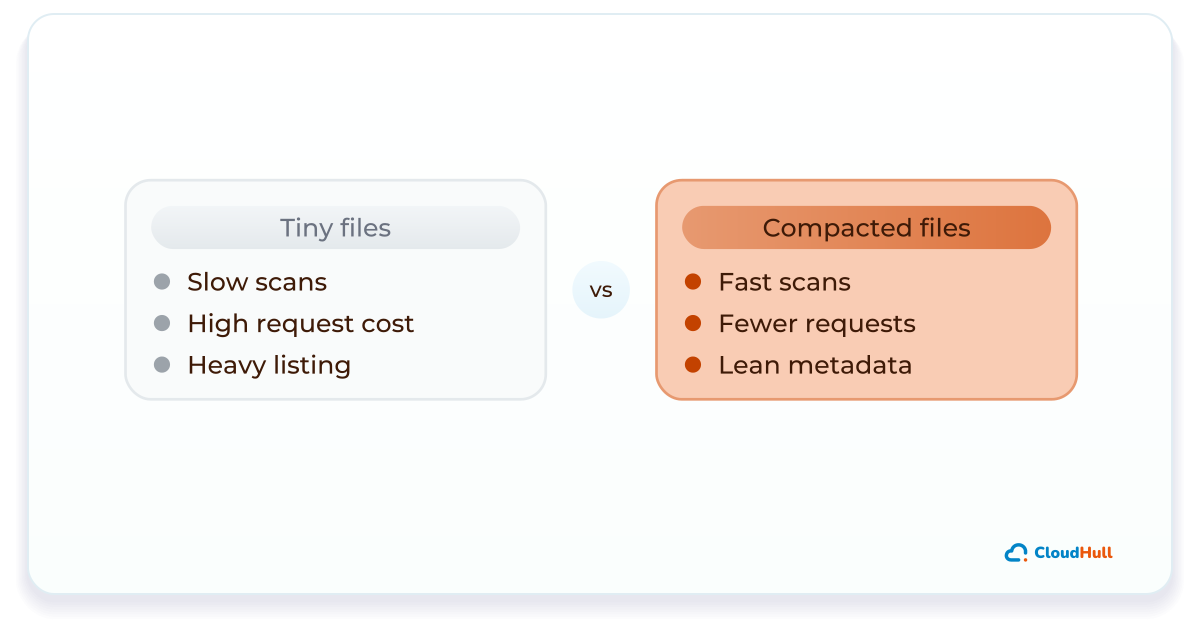
The mistake to avoid is tiny files. Thousands of small files per day slow every query. Compact them nightly and partition by date.
How events land in the lake
- The app sends events to a stream or queue.
- A job writes batches to object storage in Parquet files.
- Files are partitioned by date and event type.
- A nightly job compacts small files.
- Analysts query the data through a serverless engine.
Tools that fit here
Amazon S3 with Athena, Google Cloud Storage with BigQuery external tables or Azure Data Lake Storage with Synapse are common choices. Iceberg or Delta tables add reliable updates.
Raw Landing Zone for a Warehouse
An ecommerce company loaded source data straight into its warehouse and lost the raw copy each time a transformation changed. A landing zone in the lake kept every extract unchanged. When a rule changed, the team replayed history instead of begging the source team for a new export.
The cost is duplicate storage, and object storage makes that cheap. Set a retention rule, such as 13 months, and review it once a year.
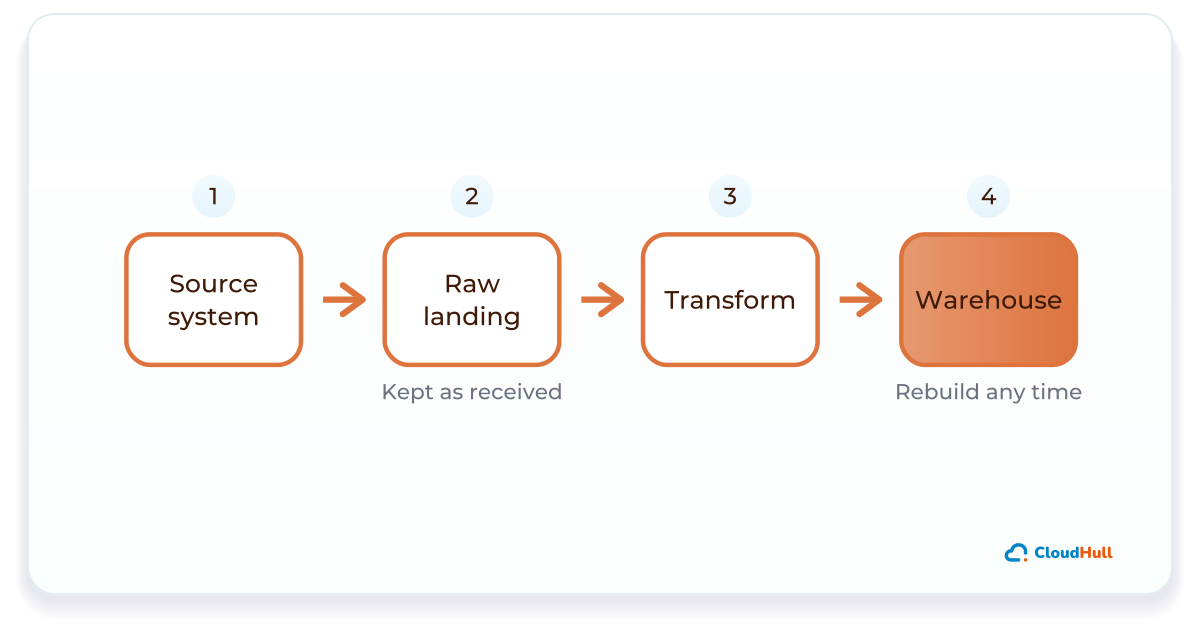
How the landing zone works
- Each source writes a daily extract to its own folder.
- Files keep the original format and a load timestamp.
- A catalog entry records owner and schema.
- The warehouse reads from the lake and transforms.
- Retention rules delete old files on schedule.
Tools that fit here
Your cloud provider storage with lifecycle rules covers most needs. A catalog such as AWS Glue or Unity Catalog documents the datasets. See how this feeds a warehouse in my cloud data warehouse consulting overview.
Log and Audit Archive
A payments startup had to keep application and access logs for years, and its logging tool charged by volume. Older logs moved to the lake in a compressed format, with a query engine for investigations. Costs dropped, and the security team could still search a year of history within minutes.
Protect the archive. Use write-once settings where your policies require it, restrict access and encrypt it. Retention periods are a legal question, so confirm them with your advisers.
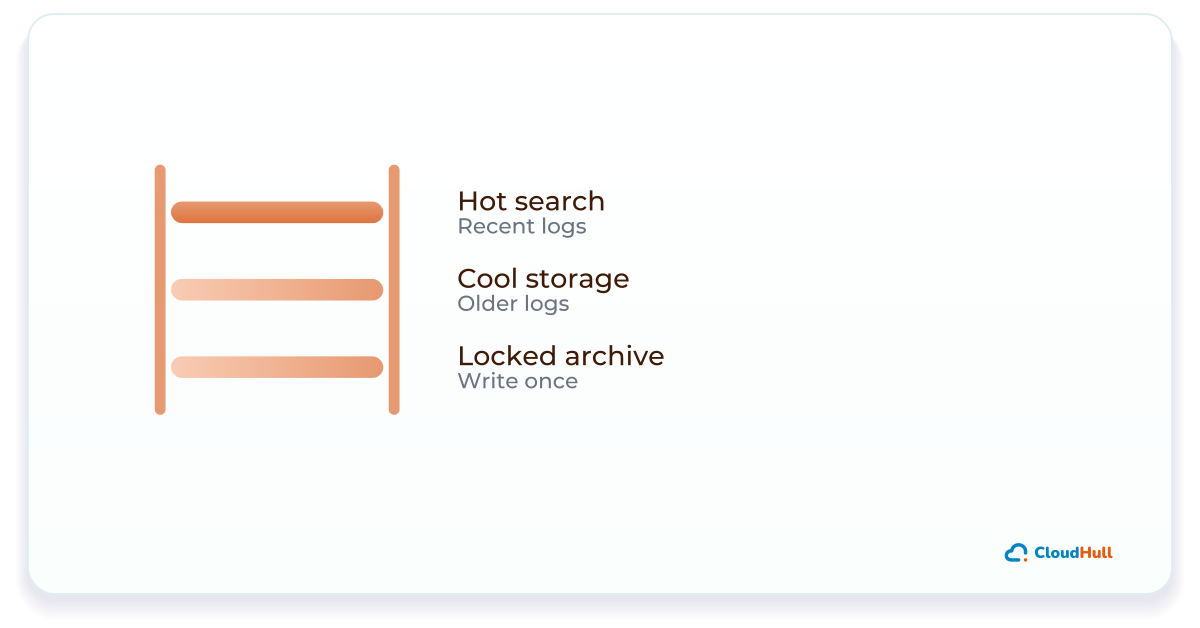
How the archive is built
- Logs ship to object storage every few minutes.
- Files are compressed and partitioned by day and service.
- Object lock or retention policies protect the files.
- Access is limited to a security role and logged.
- A query engine handles investigations.
Tools that fit here
Native log export, object lifecycle rules and a serverless query engine do the job. A security analytics tool can sit on top.
Machine Learning Feature Store
A lender trained credit models from extracts that each analyst built differently, so results never matched. The lake held versioned training datasets built from governed tables. Data scientists could reproduce a model from last year, and auditors could see which data went in.
Versioning is the whole point. Record the dataset version with every trained model, or you lose reproducibility.
How training data is prepared
- Source tables land in the raw zone.
- Cleaning jobs produce curated tables.
- Feature jobs write versioned feature tables.
- Training jobs read a named version.
- The model record stores the dataset version.
Tools that fit here
Lakehouse platforms and managed feature stores support this. For small teams, versioned Parquet and a catalog are enough to start. Pairing it with a data lake use cases review helps you pick targets.
IoT and Sensor Data Lake
A logistics company collected temperature and location data from thousands of devices every few seconds. The volume overwhelmed its database. A streaming path wrote readings to the lake, and daily jobs rolled them into summary tables for dashboards and alerts.
Late and duplicate readings are normal. Design for them, and keep raw and summary data separate so you can recompute.
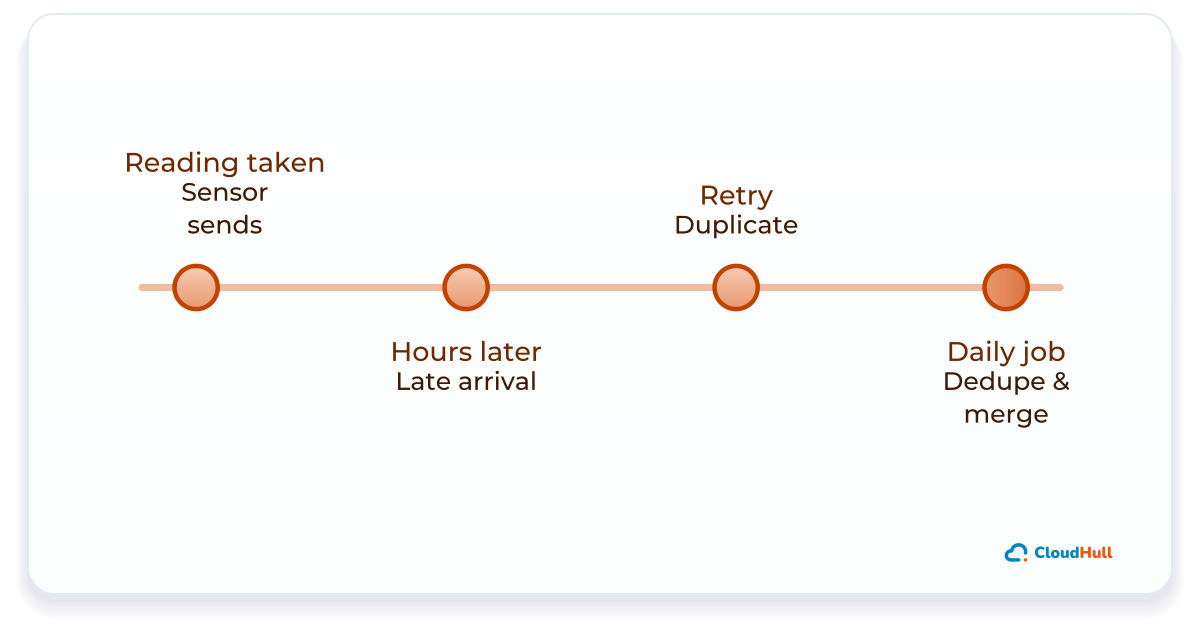
How readings are processed
- Devices send readings to a managed ingestion service.
- A stream job writes raw files to the lake.
- Late and duplicate records are handled in a clean step.
- Summaries roll up by device and hour.
- Alerts read from the summary layer.
Tools that fit here
Managed streaming services, such as Kinesis, Pub/Sub or Event Hubs, feed the lake. Time-series engines handle fast dashboards on top.
Customer Data Consolidation
A retailer had customers in a store system, an ecommerce platform and a loyalty app. The lake collected all three as raw extracts, and matching rules built one customer table. Marketing could finally see who bought online and in store, and consent flags followed each record.
Privacy comes first. Store consent and deletion requests in the same place, and test that a deletion reaches every copy. Rules differ by country, so confirm the current requirements with your advisers.
How one customer record is built
- Each system lands raw customer files.
- Names, emails and phones are standardized.
- Matching rules link records across systems.
- The curated customer table keeps the winning value per field.
- Consent flags and deletion requests are applied everywhere.
Tools that fit here
Matching can run in SQL or with a data quality tool. A customer data platform may sit on top when marketing needs activation.
Document and Image Lake
An insurer kept claim photos and PDFs in scattered file shares. The lake stored them in object storage with metadata tables, and extraction services pulled text and key fields. Adjusters searched by claim number and found everything in one place.
Metadata does the heavy lifting. Without claim ID, date and type attached to every file, the lake is only a bigger file share.
How documents become searchable
- Files upload to object storage with a claim ID.
- A metadata table records type, date and owner.
- Extraction services read text and fields.
- Results go to a searchable table.
- Access follows claim and role rules.
Tools that fit here
Cloud document AI services extract text and fields. Keep sensitive documents in a separate zone with stricter access.
How a Lake Becomes a Swamp, and How to Prevent It
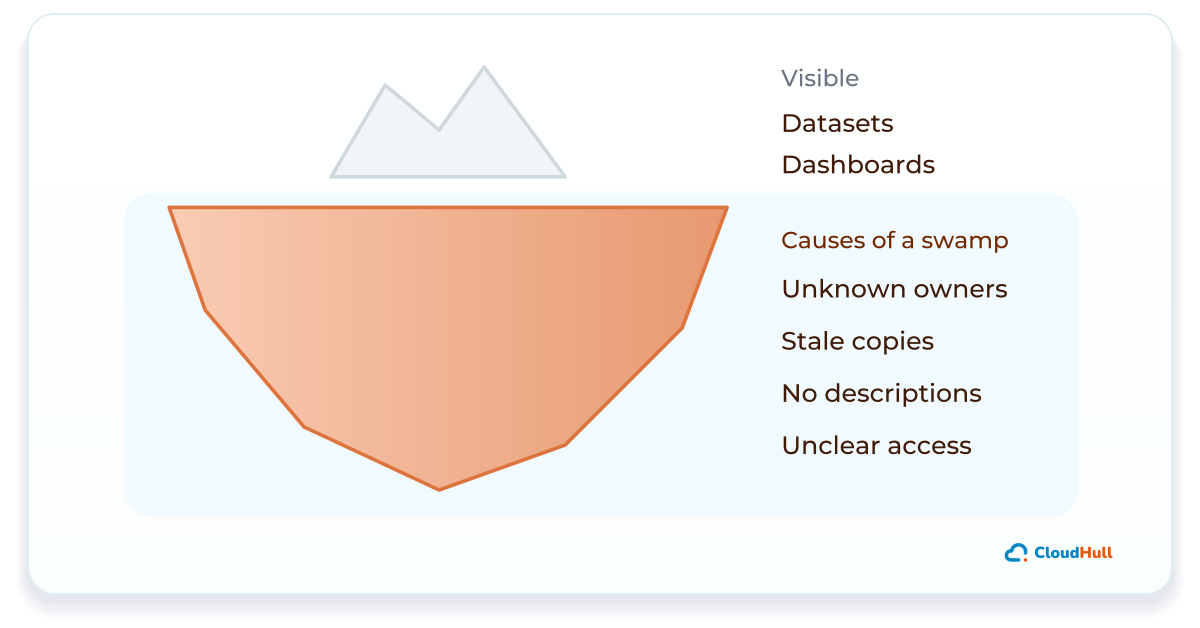
Every failed lake I have seen had the same four gaps: no owners, no catalog, no zones and no cost view. Datasets arrive, nobody knows which are current, and analysts stop trusting what they find. Prevention is dull and effective. Name an owner for each dataset, register it in a catalog, keep raw, cleaned and ready data apart and show monthly storage and query cost per team.
Start small. A lake with five governed datasets beats one with five hundred unknown ones. My list of cloud data lake best practices goes into the rules I apply on every project.
How to Choose the Lake Example to Build First
Pick the example with a clear owner and a payoff you can measure in a quarter. For most companies that is the raw landing zone, the event store or the log archive. Machine learning and customer consolidation need more governance and make better second projects.
- Who owns the data, and who uses it?
- How large is it, and how fast does it grow?
- Which queries will run, and how often?
- Does it hold personal or regulated data?
To compare options by payoff, read my ranking of cloud data lake use cases. If the main question is cost, check the three-year numbers before you build.
Questions About Cloud Data Lake Examples
What Is a Good First Data Lake Project?
A raw landing zone for your warehouse, a log archive or an event store. Each has a clear owner, simple structure and a cost you can measure within a quarter.
Do I Need a Data Lake If I Already Have a Warehouse?
Not always. A lake helps when you have large or varied data, need raw history or want cheap long-term storage. If your data is small and structured, a warehouse alone is simpler.
How Much Does a Data Lake Cost to Run?
Storage is cheap per gigabyte, and the bill mostly comes from queries, streaming jobs and the people who run it. Estimate scan volume per month and set budgets before you open it to every analyst.
What Is the Difference Between a Lake and a Lakehouse?
A lakehouse adds table formats, transactions and governance on top of lake storage, so it behaves more like a warehouse. Many new lakes use Iceberg or Delta tables for that reason.
How Do I Keep a Lake from Turning into a Swamp?
Name owners, register every dataset in a catalog, keep raw and curated data apart and report cost per team. Review unused datasets every quarter and archive them.
Is a Data Lake Secure Enough for Customer Data?
It can be, if you encrypt data, restrict access by role, log access and separate sensitive zones. Confirm current privacy requirements with your advisers.
How Long Does It Take to Build a First Lake?
A focused first dataset, such as logs or events, can be running within a few weeks. Governance, catalog and training take longer and should be part of the plan from the start.
Sources
- Amazon S3 documentation
- Apache Iceberg
- Delta Lake
- Google Cloud Storage documentation
- Azure Data Lake Storage documentation
Please note: this guide is general information and not legal, financial or tax advice. Numbers and examples are typical-project estimates; confirm current details with your providers and advisers.
Did this article help you?
Thanks, noted.
Garrett Linville
Garrett leads the Cloud Hull editorial team and works with the consultants to turn real client projects into practical guides on cloud migration, DevOps, security and cost control. Each article is edited together with the consultant who did the work, and every price and limit is checked against current provider documentation. He is based in the USA and works remotely.