Black Friday Without a Crash
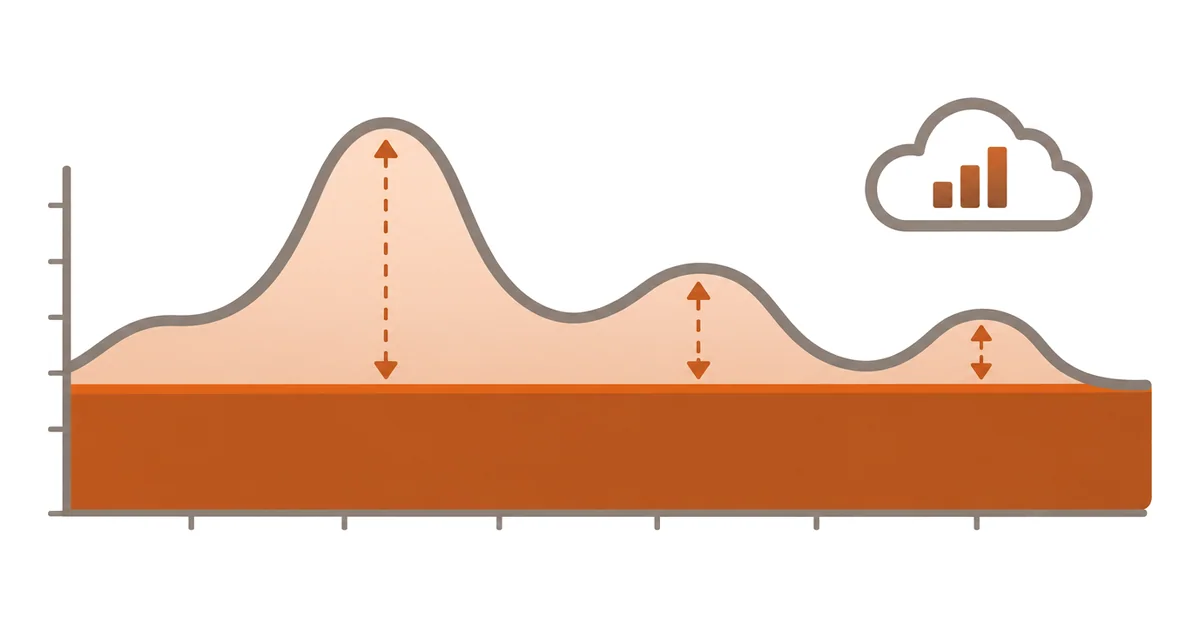
“Our shop slowed to a crawl every holiday season. Cloud Hull redesigned the architecture around autoscaling and a managed cache. Peak traffic ran 3x higher than the year before, and page times stayed under two seconds.”
Strategy & Migration
Architecture & Infrastructure
DevOps & Cloud Native
Security & Cost Control
Data & Business Platforms
Your cloud bill gets a clear owner for every dollar, a ranked list of savings and a routine that keeps costs down. You start with a free first call and strategy workshop.

Cloud cost optimization consulting is a service that finds and removes waste in your cloud spend, matches resources to real usage and sets up the habits that keep the bill under control. You get a ranked list of savings, help to deliver them and a review routine for your team.
The work covers oversized and idle resources, storage and data transfer, commitment discounts such as Savings Plans and reserved instances, and the tagging and budgets that show who spends what. A consultant looks at both the invoice and the architecture behind it, because many costs come from design choices.
The service often follows the FinOps phases of Inform, Optimize and Operate. You can use one part, such as a one-time assessment, or the full path through to a monthly review.
A good engagement covers the path from a confusing invoice to a routine your team can run, so the savings are not a one-time event.
Idle servers, oversized databases and forgotten storage pile up quietly. Many teams accept them as the price of growth, when most of that spend can be removed.
When resources carry no tags, nobody can say who runs them, so nobody feels free to switch them off.
Idle resources billed month after month
A looping job or a forgotten test cluster can add thousands in days, and the first sign is the monthly bill.
Finance finds out after the money is spent
Discounts bought for servers that were later retired keep billing for capacity you no longer use.
One to three years of unused commitment
Without shared numbers, cost talks turn into blame, and the work never gets prioritized.
Findings that never reach the backlog
Generic advice says to rightsize and buy commitments. Your bill has its own pattern: a few services drive most of the cost, and a few teams drive most of those. Your review starts with those, so the first savings come from where the money actually goes.
From there you get a ranked list with an owner, an estimate and a risk rating for each finding. Your engineers can read it, challenge it and act on it, and finance can track it against the invoice.
Cost work gives you more than a lower bill. It shows which products earn their keep, makes capacity planning honest and frees budget for new projects. Start with one account, prove the method and extend it.
You talk through your clouds, your monthly spend and what you have tried. Your consultant asks about growth plans, upcoming launches and who owns what, and points to where savings are most likely.
Read-only access to billing and usage data lets your consultant map spend by owner, service and environment. Findings are ranked by saving, effort and risk.
Low-risk changes go first, then rightsizing and commitments. Each change has an owner, and results are checked against the invoice.
A short monthly review covers the top cost drivers, budgets, open findings and expiring commitments, so costs stay down as you grow.
Choose a single service or get the full program, from assessment to monthly review.
Spend is broken down by team, product and environment, so every line has an owner.
Each finding has an estimate, an effort rating and a risk rating, so you act on the best ones first.
Idle, oversized and orphaned resources are listed with safe steps for each change.
Savings Plans, reserved instances or committed use discounts sized on usage you have proven.
Budgets per owner and alerts for unusual spend, sent where your team will see them.
A simple agenda and a savings tracker that finance and engineering both use.


“Our shop slowed to a crawl every holiday season. Cloud Hull redesigned the architecture around autoscaling and a managed cache. Peak traffic ran 3x higher than the year before, and page times stayed under two seconds.”
“We had a data center lease ending in six months. Cloud Hull sorted our workloads into waves, ran test cutovers and moved 86 of them on schedule. Customers saw no outage, and the lease was not renewed.”
“Releases were a Friday event with three people on call. Cloud Hull built a CI/CD pipeline, added automated tests and set up infrastructure as code. We now deploy daily, and rollbacks take minutes instead of an evening.”
Where the friction is today, and what changes.
Why outside help pays off when your cloud bill keeps growing.
Schedules, cleanup and budgets show on the next invoice. You get early wins that build trust for the harder changes.
Tags and allocation connect spend to teams and products. Your cost per customer or per order becomes a number you can track.
Changes are based on measured peaks and tested before and after. Your services keep their performance while the bill falls.
Your team gets a ranked list and a routine, so cost work stops competing with feature work for attention.
Every project gets a fixed quote after a free discovery call. Here is how the scope usually looks by size.
| Engagement | Scope | Typical length | Price |
|---|---|---|---|
| Cost assessment | One to three accounts, ranked savings list | 1 to 3 weeks | Fixed quote |
| Assessment and deliveryMost requested | Assessment, rightsizing, cleanup and commitment plan | 2 to 4 months | Fixed quote |
| FinOps program | Delivery plus tagging, budgets and a monthly review | Ongoing | Fixed quote |
After we talk, you get a firm price with no hidden costs.
Each change has an owner, a test and a rollback, so savings never come at the cost of an outage.
You get short weekly updates on what is done, what is blocked and what is needed from you.
After your call you get a summary with priorities, timeline and a first savings range to share with your team.

Idle, oversized and orphaned resources are the easiest savings. Your list shows each one with its owner, so nothing is deleted until the right person says yes.
Sizes are chosen from measured peaks, not averages, and every change is checked before and after, so performance stays where it was.

Discounts only pay off for steady load. You cover your proven baseline first, so you save on what you keep and stay flexible on what you might not.
Coverage and utilization are reviewed every month, and expiring commitments are on the calendar well before they end.
Where the money usually goes first in your sector.
Spend is driven by data, logging and compliance workloads. Pair cost work with cloud architecture consulting to cut cost without weakening controls.
Peak seasons inflate capacity that stays on all year. See cloud infrastructure consulting for autoscaling and scheduling that follow demand.
Cost per customer decides margin. Explore cloud DevOps consulting for pipelines and environments that clean up after themselves.
Running two environments at once doubles the bill for a while. Cloud migration consulting keeps the overlap short and the sizing right.
The right partner leaves you with a lower bill and a routine you can run. Before you sign, check that your cloud cost optimization consulting partner can show you each of these:
Be wary of fees tied to a percentage of your cloud bill. They can reward higher spend. A fixed quote keeps the advice independent.
You know the price before the work starts.
Full-service, end-to-end consulting at a price that fits a first project.
One contact who knows your project and answers your questions fast.
Read-only access, documented data flows and NDAs on request.
Your consultant reviews your cloud bill and usage, finds waste, ranks savings by effort and risk, and helps you act on them. You also get tagging and budget standards, a commitment plan and a monthly review routine, so the savings last.
It depends on your starting point. In my client work, identified savings often fall between 15 and 30 percent of the bill, and part of that takes time to deliver. After the free discovery call and a first look at your data, you get a realistic range.
Read-only access to billing and monitoring data is enough for the review. Changes are made afterward by your team, or by the consultant with your approval, one at a time.
AWS, Microsoft Azure and Google Cloud are all covered, including Kubernetes and multi-cloud setups. Your review shows costs across providers in one view where the data allows.
Not when changes are based on measured peaks and tested before and after. Each change has an owner who approves it, and risky ones are scheduled with a rollback plan.
A cost assessment takes one to four weeks, depending on the number of accounts. Acting on the findings usually runs for two to four months, followed by an optional monthly review.
Often not at first. Native provider tools cover a lot, and a platform becomes useful when you run several clouds or need allocation across many teams. You get a neutral recommendation based on your size.
FinOps is the wider practice of managing cloud financial operations across teams. Cost optimization is the work of reducing spend within it. Your engagement can cover both.
Yes. You get a commitment plan based on your proven baseline, with coverage targets and a schedule for reviewing it. Waste is removed first, so you do not lock in oversized usage.
Yes. A startup may need budgets, tags and a few cleanup rules. A larger company may need allocation across many teams, commitment management and a FinOps review cycle. The scope and fixed quote match your size.

Get a free look at your spend and a clear plan for your first savings.