Main Points
- The first hurdle is ownership: name one accountable person per product before anything else.
- A readable bill by product and team matters more than a perfect dashboard.
- Turn every one-off saving into a rule, or the waste will return within months.
- Buy commitments only after ownership and usage data are clean.
Most cloud cost programs do not fail because the savings are missing. They fail because people, data and incentives get in the way. Across the cloud cost optimization consulting projects I run, the same seven hurdles show up again and again, and the technical fixes are the easy part.
Each section below names the hurdle, shows how it looks from the inside and gives you a way through. Some of the advice is blunt, because that is how these problems get solved. Where I am not sure, I say so.
Seven Hurdles and Where They Come From
| Challenge | Where it starts | First step to fix it |
|---|---|---|
| 1. No clear owner | Spend sits in a shared account | Assign a name per product |
| 2. Bills nobody understands | Hundreds of line items and unclear names | Group costs by product and environment |
| 3. Engineers see no reason to act | Savings go to finance, not to the team | Show each team its own number |
| 4. Commitments bought blind | Fear of paying too much on demand | Start with the steadiest workloads |
| 5. Savings that do not stick | Fixes are one-off clean-ups | Add policy and a monthly review |
| 6. Shared and platform costs | Containers and data tools mix workloads | Agree an allocation rule |
| 7. Cost versus speed | Delivery targets beat savings targets | Set a unit cost budget per product |
The Seven Cost Optimization Challenges in Detail
No One Owns the Bill
A cloud account that many teams share has no owner in practice. Everyone assumes someone else watches the invoice, and the bill grows by a few percent each month. When I ask who approves a new database, the answer is usually everybody and nobody.
How to solve it: give every product one accountable name, and put that name on every resource with a tag. Start with the top five products by spend. Do not wait for a perfect org chart. A rough owner today beats a perfect owner next year. A written approach to mapping the starting point is in my guide to a cloud cost optimization assessment.
Steps to Name Owners
- List your top five products by monthly spend.
- Ask each product lead to confirm who approves new resources.
- Add an owner tag and enforce it at creation.
- Publish the list where finance and engineering can both see it.
Helpful Tools
Tagging policy and a shared ownership sheet are enough here. Your provider's native policy tools can block untagged resources.
Bills That Nobody Can Read
Provider invoices list thousands of line items with technical names. Finance sees one number, engineering sees instance types, and neither can answer what a feature costs. Teams then argue from screenshots instead of data, which wastes meetings and trust.
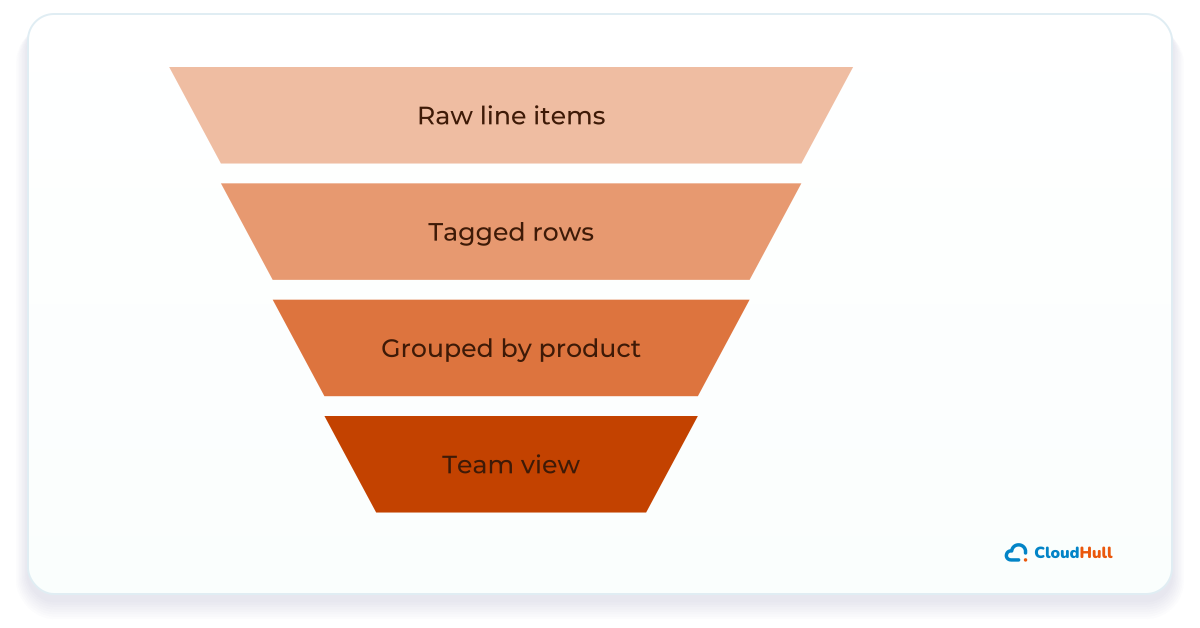
How to solve it: turn the raw billing export into a view by product, environment and team. A shared spreadsheet is enough to start, and a dashboard can follow. Name the three questions the view must answer, such as what changed since last month. The measures behind those views are explained in my list of cloud cost optimization metrics.
How to Make the Bill Readable
- Export the detailed billing data to a central place.
- Map accounts and tags to products and environments.
- Build one view with last month, this month and the change.
- Agree the three questions the view must answer.
Helpful Tools
A billing export plus a spreadsheet works for a start. Move to a BI dashboard or a cost platform once several teams depend on it.
Engineers Have No Reason to Care
If the savings go to the finance budget and the work lands on the engineering backlog, the work loses. I hear it often: "we have features to ship". That is a rational answer, not laziness.
How to solve it: show each team its own cost, and let it keep a visible share of the savings, for example as budget for tooling or time for debt. Add cost as a normal review item, next to performance and security. Do not shame teams with leaderboards. In my experience, that works for one month and then people start gaming it.
Ways to Give Teams a Reason
- Send each team its own cost every month.
- Agree a savings target with the team lead, not for them.
- Let the team keep a share of the savings as budget.
- Add a cost question to design reviews.
Helpful Tools
Native cost reports with per-team views cover the basics. A chargeback or showback report adds weight once the numbers are trusted.
Commitments Bought Without Data
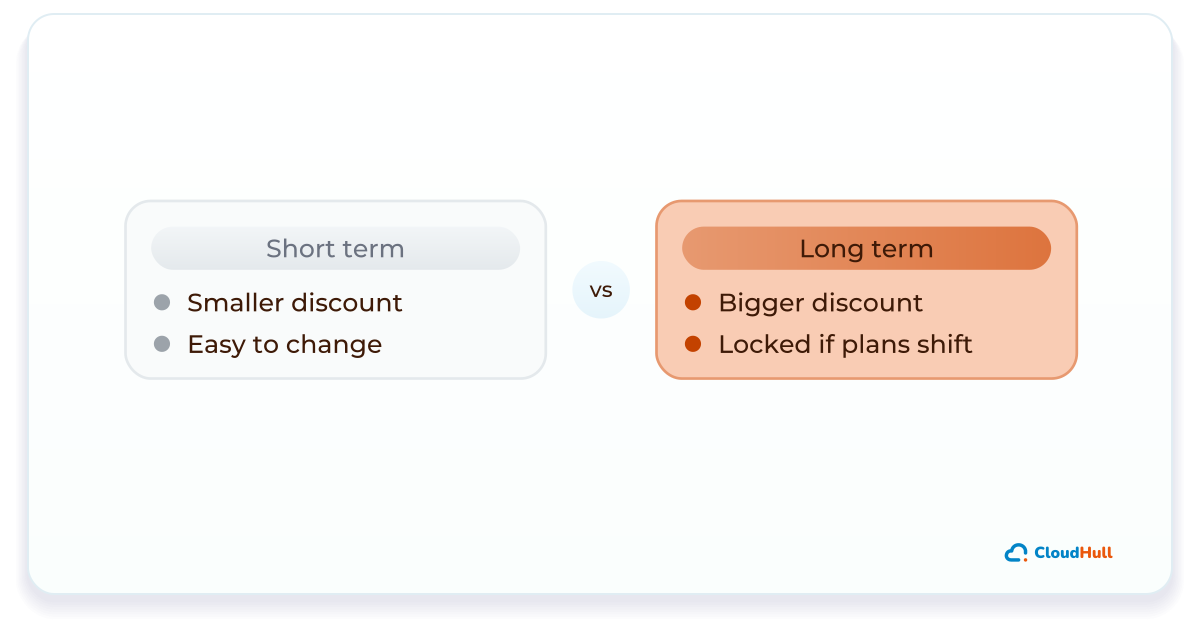
Fear of on-demand prices pushes teams to buy commitments early. Then a migration or a redesign shrinks the workload, and the commitment becomes a fixed cost for one or three years. Under-buying is the opposite trap, and it is quiet, so it gets less attention.
How to solve it: commit to the steady base load first, using at least three months of usage. Keep the term short for workloads that may change. Review utilization weekly after each purchase. The buying patterns that hold up best are collected in my notes on cloud cost optimization best practices.
Steps for a Safer Commitment Purchase
- Collect three months of usage per workload.
- Separate steady base load from variable load.
- Buy for the base load only, with a short term first.
- Check utilization every week for the first quarter.
Helpful Tools
The recommendation reports in your provider's console are a useful start. Always sanity check them against your roadmap.
Savings That Do Not Last
A clean-up week finds idle resources, and the bill drops. Six months later, it is back where it started because nothing changed in how people create resources. One-off projects fix symptoms. Habits cause the bill.
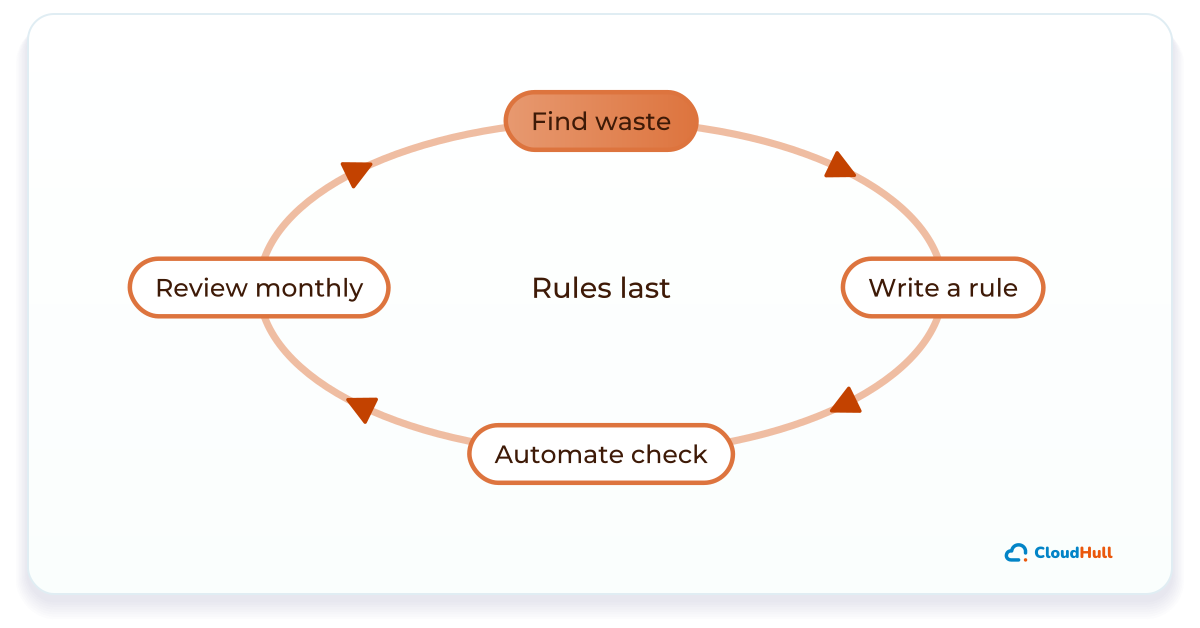
How to solve it: turn each finding into a rule. Require tags at creation, set automatic shutdown for test environments and expire snapshots after a fixed period. Hold a short monthly review of the same five numbers. A longer treatment of this loop is in my cloud cost optimization framework.
Steps to Make Savings Stick
- Turn each finding into a written rule.
- Automate the rule, for example shutdown schedules for test systems.
- Set an expiry date on snapshots and temporary resources.
- Review the same five numbers every month.
Helpful Tools
Policy engines and scheduled jobs handle most of this. Infrastructure as code makes the rules repeatable.
Shared Costs Nobody Can Split
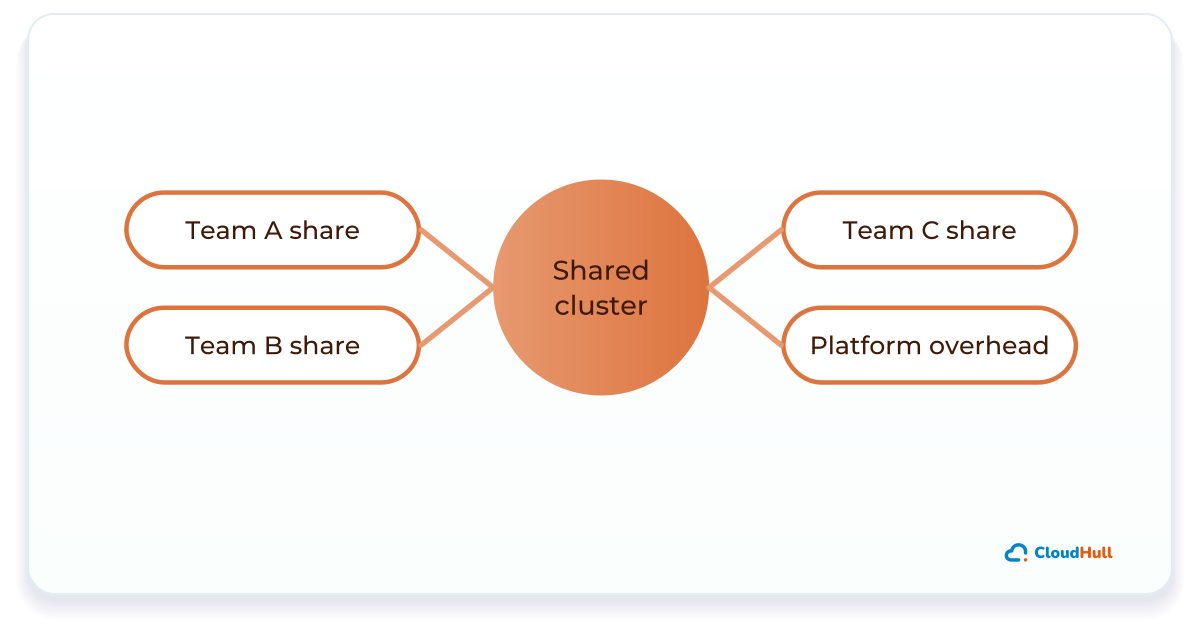
Kubernetes clusters, data platforms and networking serve many teams at once. A single node can run workloads from four products. Splitting the cost fairly is hard, and a bad split starts arguments that last longer than the savings.
How to solve it: agree on a simple allocation rule, such as the share of requested CPU and memory per team, and apply it consistently. Accept that it will be roughly right. Revisit it twice a year. I am openly unsure which method is best for every case, and I would rather have a consistent rough rule than a precise one that changes.
Steps to Split a Shared Platform
- Choose one allocation rule, such as requested CPU and memory.
- Apply it to the last three months and check for surprises.
- Show the result to the teams affected.
- Freeze the rule for six months before changing it.
Helpful Tools
Container cost tools can compute the split for you. Keep the rule simple enough to explain in one sentence.
Cost Competes With Speed
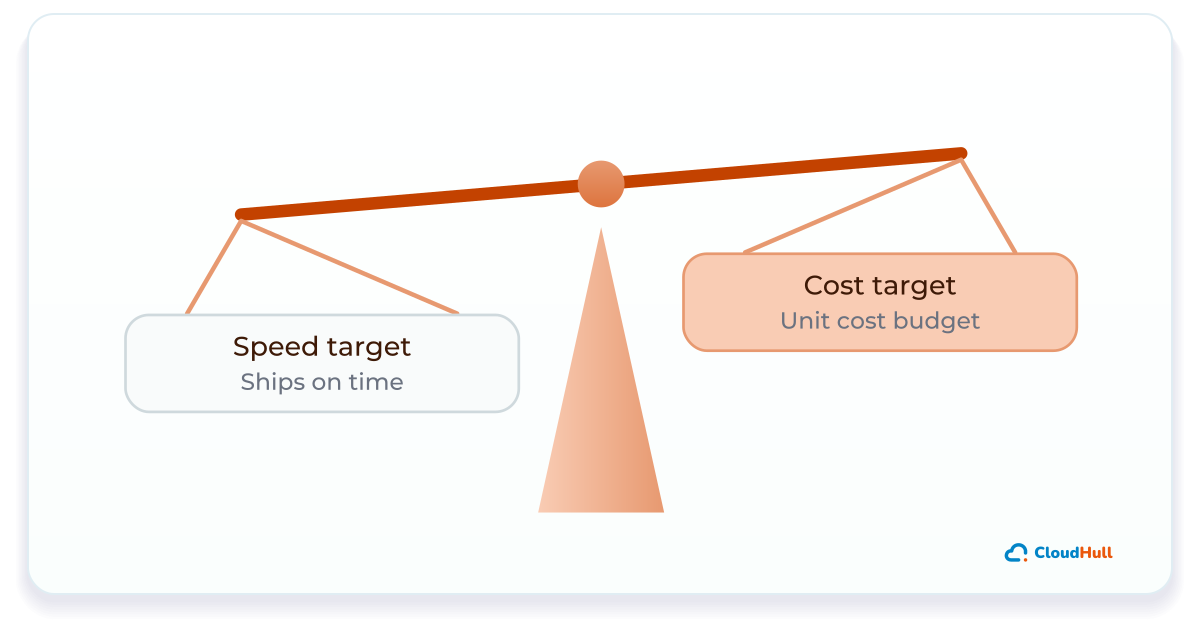
A launch deadline will beat a savings target every time, and it should, when the launch matters. The trouble comes when speed always wins and cost never gets a turn. Waste then builds up in the form of oversized instances chosen to be safe.
How to solve it: set a unit cost budget for each product, such as a maximum cost per order, and let the team decide how to meet it. That keeps speed and cost in the same conversation. Tools can help you find candidates for right-sizing, and my ranking of cloud cost optimization tools compares what each one does well.
Ways to Put Cost Next to Speed
- Define a unit cost for the product, such as cost per order.
- Set a budget that matches the margin you need.
- Let the team choose how to hit it.
- Review the unit cost beside latency and error rate.
Helpful Tools
A unit cost chart next to your performance dashboard is enough. Do not add a separate tool just for this.
What This Looked Like at a Mid-Sized Retailer
One retailer I worked with had a monthly bill that had grown for a year without anyone being able to say why. Three teams shared one account, and about a third of the spend carried no tag. The first month went entirely into naming owners and building a view by product.
Nothing was cut in that month, which frustrated the finance lead. In month two, the owners found idle test environments and an oversized search cluster, and the bill fell without any argument. The lesson I took from it is that visibility looks like delay at first and then pays for itself. Teams that skip it end up debating whose number is right.
Which Hurdle to Tackle First
You cannot fix all seven at once. Sequence matters, because ownership and visibility make every later step easier. I use a simple order in most projects and adjust for the company.
| Stage | Work on | Reason |
|---|---|---|
| First month | Ownership and bill readability | Everything else needs an owner and a clear view |
| Second month | Engineer incentives and shared cost rules | Creates agreement before more rules arrive |
| Third month | Commitments and policy | Safe once usage data is clean |
| Ongoing | Unit cost budgets | Keeps speed and cost in one conversation |
Choosing Where to Begin
Answer these four questions to find your starting point:
- Can you name an owner for each of your top five products?
- Can finance and engineering read the same cost view?
- Do your commitments run above 90 percent utilization?
- Does every new resource get tagged on creation?
A no on the first two means you start with people and data. A no on the last two means you start with rules. If your estate is small or you are early in your move to the cloud, the lighter route in my guide to cloud migration challenges covers the cost traps in a move.
Questions About Cloud Cost Optimization Challenges
What Is the Biggest Cloud Cost Optimization Challenge?
Ownership. When nobody is accountable for a product's spend, every other fix gets stuck. Naming one owner per product is the cheapest and most effective first step.
Why Do Cloud Savings Not Last?
Most savings come from one-off clean-ups. Without rules such as required tags, automatic shutdown and expiry dates, the same waste returns. Turn each finding into a standing policy.
How Do I Get Engineers to Care About Cost?
Show each team its own number, make cost part of normal reviews and let teams keep part of what they save. Public rankings work briefly, then invite gaming.
Should I Buy Commitments Right Away?
Not before you have clean usage data. Commit only to the steady base load, keep terms short for uncertain workloads and check utilization weekly after each purchase.
How Do I Split the Cost of Shared Platforms?
Use a simple rule, such as each team's share of requested CPU and memory, and apply it consistently. A rough rule that stays stable is better than an exact one that keeps changing.
How Long Does a Cost Optimization Program Take to Show Results?
Visible savings from idle resources often appear in the first month. Ownership, policy and commitment changes take a quarter to settle. Judge progress by your own unit cost trend.
Can a Small Team Handle These Challenges Alone?
Yes, for a small estate. Start with owners and a readable bill, add three metrics and review them monthly. Outside help pays off when the bill is large, spread across many teams or has outgrown spreadsheets.
Please note: this guide is general information and not legal, financial or tax advice. Numbers and examples are typical-project estimates; confirm current details with your providers and advisers.
Did this article help you?
Thanks, noted.
Garrett Linville
Garrett leads the Cloud Hull editorial team and works with the consultants to turn real client projects into practical guides on cloud migration, DevOps, security and cost control. Each article is edited together with the consultant who did the work, and every price and limit is checked against current provider documentation. He is based in the USA and works remotely.