Deploys From Weekly to Daily
“Releases were a Friday event with three people on call. Cloud Hull built a CI/CD pipeline, added automated tests and set up infrastructure as code. We now deploy daily, and rollbacks take minutes instead of an evening.”
Strategy & Migration
Architecture & Infrastructure
DevOps & Cloud Native
Security & Cost Control
Data & Business Platforms
Your team ships changes faster and breaks less, with pipelines, infrastructure as code and monitoring that fit your cloud. You start with a free first call and strategy workshop.

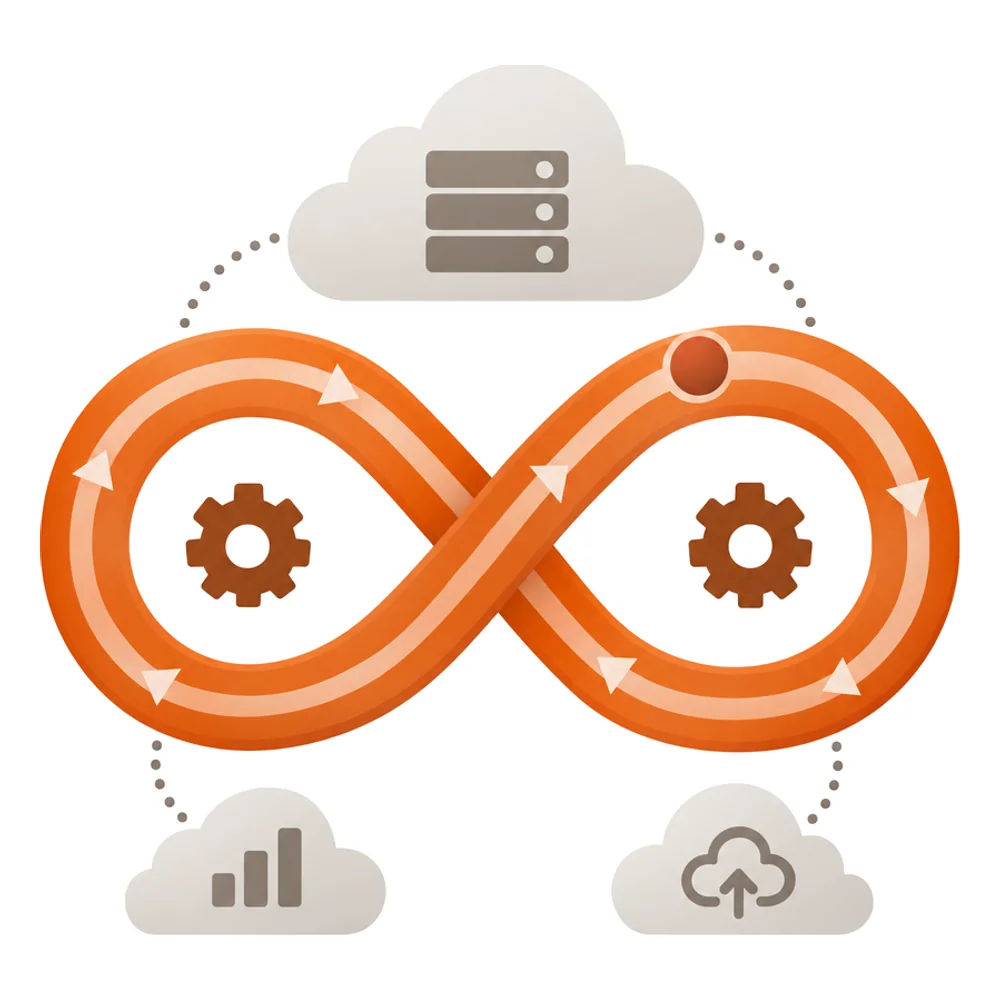
Cloud DevOps consulting is a service that helps your team build the pipelines, environments and monitoring that move code from a developer's laptop to production safely and often. You get automated builds and tests, infrastructure defined as code, container platforms and alerts that tell you about problems before customers do.
DevOps is about shortening the path between an idea and a working feature. In the cloud that means every environment can be created from code, every change goes through the same automated checks and every release can be rolled back in minutes. Teams that work this way deploy more often and recover faster when something breaks.
In practice, the engagement covers an assessment of your current delivery process, a design for the target pipeline, the build, training for your engineers and monthly reporting on delivery speed and stability. You keep full ownership of the code and the documentation.
A good engagement covers the full path from first assessment to a team that runs the new setup on its own.
Manual deploys, fragile environments and blind spots in production cost you time, money and customer trust. Most teams accept it as normal, when it does not have to be.
Deploys need a calendar slot, a checklist and three people on call, so features wait weeks to reach customers.
Features that sit finished and unreleased
Manual steps and differences between environments cause failures that are hard to trace and slow to fix.
Incidents that start with a deployment
Staging does not match production and fixes live in one engineer's memory, so every change is a guess.
Hours lost to environment problems
Without monitoring and alerts, you hear about failures from users first, often hours after they start.
Complaints that arrive before alerts
DevOps projects that stall usually start with a tool. Yours starts with a clear picture of how code moves today, where it waits and where it breaks.
From there you get pipelines, environments and monitoring that fit the cloud you already use, whether that is AWS, Azure or Google Cloud. Your engineers keep control, and every piece has an owner, documentation and a way to measure whether it helps.
If you want to move faster without more incidents, fix the delivery path before you hire more people. Automation removes the manual steps that cause failures, and it gives every engineer the same safe way to release. Start with one service, prove the gain and extend from there.
You talk through how your team ships today, where releases get stuck and what your cloud looks like. Your consultant asks about your tools, team size and goals, and tells you honestly what to fix first.
Your delivery process is measured for speed, failure rate and recovery time. You see a scored picture of your pipelines, environments and monitoring, with a ranked list of improvements.
Pipelines, infrastructure code and dashboards are built in small releases, starting with one service. Your engineers review each step, and the setup is tested with real changes before you rely on it.
Your account manager tracks delivery measures and tunes the setup every month. More services are added to the pipeline as your team gains confidence.
Choose a single piece or the full program, from assessment to ongoing support.
Your assessment measures deployment speed, failure rate and recovery time against clear targets.
Automated builds, tests and releases on GitHub, GitLab or your current tools.
Environments built from versioned templates, so staging and production match.
A container platform designed for your workloads, with an honest check on whether you need one.
Dashboards and on-call alerts tuned to real problems, so noise stays low.
Short sessions and written runbooks so your team owns everything that was built.


“Releases were a Friday event with three people on call. Cloud Hull built a CI/CD pipeline, added automated tests and set up infrastructure as code. We now deploy daily, and rollbacks take minutes instead of an evening.”
“Our monthly cloud bill had doubled in a year and nobody could explain it. Cloud Hull tagged every resource, rightsized the idle instances and moved steady workloads to committed pricing. The bill dropped by 31% in ten weeks, and finance now sees spend per product.”
“Our shop slowed to a crawl every holiday season. Cloud Hull redesigned the architecture around autoscaling and a managed cache. Peak traffic ran 3x higher than the year before, and page times stayed under two seconds.”
How shipping changes, and what your team gets back.
Why outside help pays off when you modernize delivery.
Automated pipelines remove waiting for manual steps and approvals. Teams that deploy small changes often reach customers sooner and learn from feedback while the work is still fresh.
The same automated checks run on every change, so errors are caught before production. When something does fail, small releases are easy to diagnose and quick to roll back.
Environments created from code can be switched off when nobody uses them and sized to the real load. That keeps test and staging costs from creeping up unnoticed.
Many teams collect tools without a plan. A consultant starts from your goals and picks the smallest toolchain that does the job, so you pay for and maintain less.
Every project gets a fixed quote after a free discovery call and assessment. The table shows what each typical scope includes, so you can see where your project fits.
| Scope | What it includes | Typical duration | Best for |
|---|---|---|---|
| DevOps assessment | Delivery review, scored findings, ranked roadmap | 2 to 3 weeks | Teams unsure where to start |
| Pipeline and IaC buildTypical first project | CI/CD, infrastructure as code and monitoring for one product | 6 to 10 weeks | Teams with slow or manual releases |
| Platform program | Container platform, shared pipelines and training across teams | 3 to 6 months | Several teams on one cloud |
The assessment ends with a fixed quote and no extra charges later.
If Kubernetes or a new CI system is more than you need, you hear it on the first call.
You get short weekly updates on what is done, what is blocked and what is needed from you.
You leave the call with a summary of priorities, timing and likely cost that your colleagues can review.

No rip-and-replace projects. Your repositories, test suites and cloud accounts get connected into one pipeline, so your engineers keep working the way they know while the manual steps disappear.
New tools are only recommended when they clearly pay for themselves, which keeps cost low and adoption high.

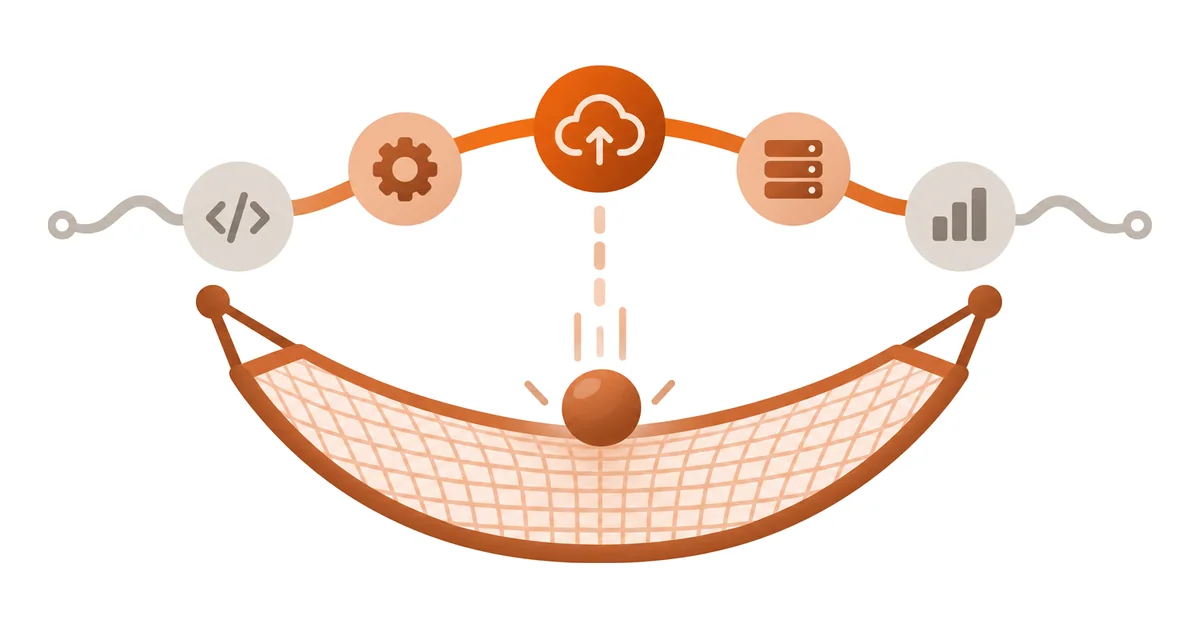
Fast releases need a safety net. Every release includes health checks, alerts and a tested rollback, so a bad change is found and reversed before it grows.
You decide the thresholds, the on-call rota and who approves production changes.
What pays back first in your sector.
Ship changes often while keeping audit trails, approvals and access controls intact. Pair delivery work with cloud security consulting to meet partner and regulator expectations.
Release safely before peaks, scale with traffic and roll back fast when a promotion goes wrong. See cloud native consulting for autoscaling architectures.
Deploy many times a day with feature flags, canary releases and environments per branch. If you still run on servers you manage, cloud migration consulting prepares the move.
Build pipelines that log every change and protect sensitive data, on infrastructure designed by cloud infrastructure consulting to match your uptime needs.
The right partner leaves your team faster and independent, not dependent on outside help. Before you sign, check that your cloud DevOps consulting partner can show you each of these:
Also ask who owns the code and documentation after launch. You should receive everything, plus training, so the capability stays inside your business.
See the full price before any build begins.
Full-service, end-to-end consulting at a price that fits a first project.
One contact who knows your project and answers your questions fast.
Least-privilege access, logged changes and NDAs on request.
A first useful result, such as one service running on an automated pipeline, usually takes four to eight weeks. A full program across several teams runs for several months. You get a timeline with your plan after the assessment, before anything is built.
AWS, Microsoft Azure and Google Cloud, plus the common tools around them such as GitHub, GitLab, Jenkins, Terraform, Kubernetes and Datadog. Recommendations follow your needs and your team's skills, not a preferred vendor.
No. Containers and Kubernetes suit many teams, but a managed service such as a platform-as-a-service or serverless functions is simpler for others. You get an honest recommendation, and you hear it early if your workload does not need Kubernetes.
Only where it helps them. The goal is a shorter path from code to production with less waiting. Your developers get a documented pipeline, a short training and a person to call during the first weeks.
Security checks run inside the pipeline: dependency and secret scanning, container image checks and policy rules on infrastructure code. Access follows least privilege, and every change is logged. Your security team can review the design before launch.
The cost depends on how many services, environments and teams are involved. You get a realistic range on your free discovery call and a fixed quote after the assessment, so the price is known before work starts.
Yes. If your team already uses GitHub Actions, GitLab CI or Jenkins, the work builds on them. New tools are only recommended when they clearly save time or reduce risk.
Your team gets full documentation, runbooks and training, and owns everything that was built. Your dedicated account manager is available for follow-up support, monthly reviews and new requests, in 5+ languages.
Before the project a baseline is recorded for deployment frequency, lead time for changes, change failure rate and time to restore. You see the same four measures every month afterward, so the improvement is visible and not a feeling.
Get a free discovery call and a clear plan for your first pipeline.