Main Points
- Ship small, frequent changes so every release is easy to review and reverse.
- Keep code, pipelines and infrastructure in Git, and let the pipeline apply changes.
- Introduce security scanning gradually: block critical findings first, report the rest.
- Track four delivery measures monthly: frequency, lead time, failure rate and time to restore.
DevOps advice is easy to find and hard to apply. The seven rules below are the ones I see strong teams follow, whatever tools they use. They come from the cloud DevOps consulting work I review, and each one has a concrete do and a concrete avoid.
You do not need to adopt all seven at once. Pick the one that matches your biggest pain, apply it for a month and add the next. If you are unsure which one that is, a quick DevOps assessment points to the weakest area.
The Seven Rules in One Table
| Practice | Do this | Avoid this |
|---|---|---|
| 1. Keep Every Change Small and Frequent | Set a rule that a pull request should be reviewable in about fifteen minutes. | Batching a month of work into one release because deployment is painful. |
| 2. Put Everything in Version Control | Protect the main branch, require review and let the pipeline apply infrastructure changes instead of individual laptops. | Clicking through the cloud console to fix a problem and never writing the change down. |
| 3. Automate the Pipeline From Commit to Production | Run fast checks first, such as linting and unit tests, and slow checks later. | Automating the build but leaving deployment to a person with a checklist. |
| 4. Define Infrastructure as Code | Start with the most painful environment to build by hand. | Writing infrastructure code once and then editing resources by hand. |
| 5. Shift Security Left Without Blocking Everyone | Start by blocking only critical findings and report the rest. | Turning on every scanner at maximum strictness on day one. |
| 6. Monitor What Users Feel, Not Just Servers | Write a short runbook for each alert that pages someone. | Alerting on every metric that moves. |
| 7. Measure Delivery and Learn From Failure | Hold blameless post-incident reviews and turn each one into one or two concrete changes with owners. | Using the numbers to compare or punish teams. |
Seven DevOps Best Practices in Detail
1. Keep Every Change Small and Frequent
Small changes are easier to review, test and roll back. A team that ships ten small changes a week learns faster than a team that ships one big release a month, and when something breaks you know exactly which change caused it.
Do this: Set a rule that a pull request should be reviewable in about fifteen minutes. Use feature flags to merge unfinished work without exposing it to users.
Avoid this: Batching a month of work into one release because deployment is painful. The pain is the signal to fix the pipeline, not to deploy less often.
2. Put Everything in Version Control
Application code, pipeline definitions, infrastructure code, dashboards and alert rules all belong in Git. That gives you history, review and a way to rebuild anything. If a setting exists only in a console, nobody can review it and nobody remembers who changed it.
Do this: Protect the main branch, require review and let the pipeline apply infrastructure changes instead of individual laptops.
Avoid this: Clicking through the cloud console to fix a problem and never writing the change down. That is how staging and production drift apart.
3. Automate the Pipeline From Commit to Production
Every commit should trigger the same build, test and scan steps in the same order. Manual steps are where mistakes and delays hide. Aim for a pipeline that a new developer can use on day one without asking anyone.
Do this: Run fast checks first, such as linting and unit tests, and slow checks later. Keep the full pipeline under about ten to fifteen minutes so developers do not look for ways around it. The DevOps tools ranking compares the main CI/CD options.
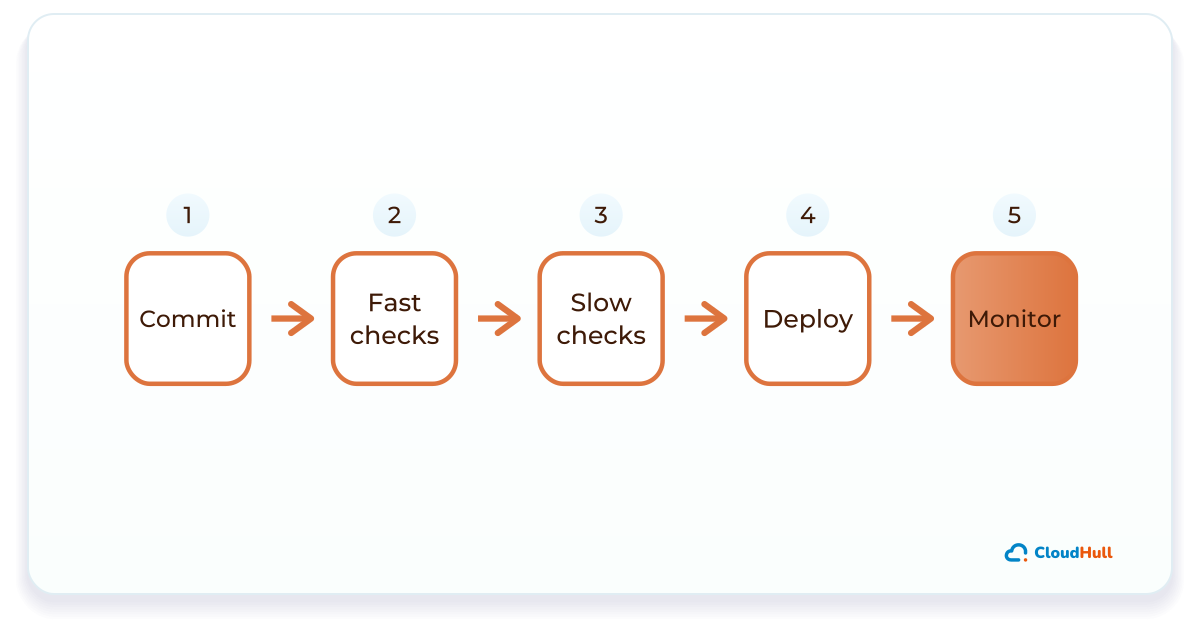
Avoid this: Automating the build but leaving deployment to a person with a checklist. The last mile is the riskiest one.
4. Define Infrastructure as Code
Servers, networks, databases and permissions should be created from versioned templates. The payoff is repeatability: you can build a test environment in minutes, and you can rebuild production after a disaster with a known result.
Do this: Start with the most painful environment to build by hand. Use modules for repeated patterns and keep state in a shared, locked location.
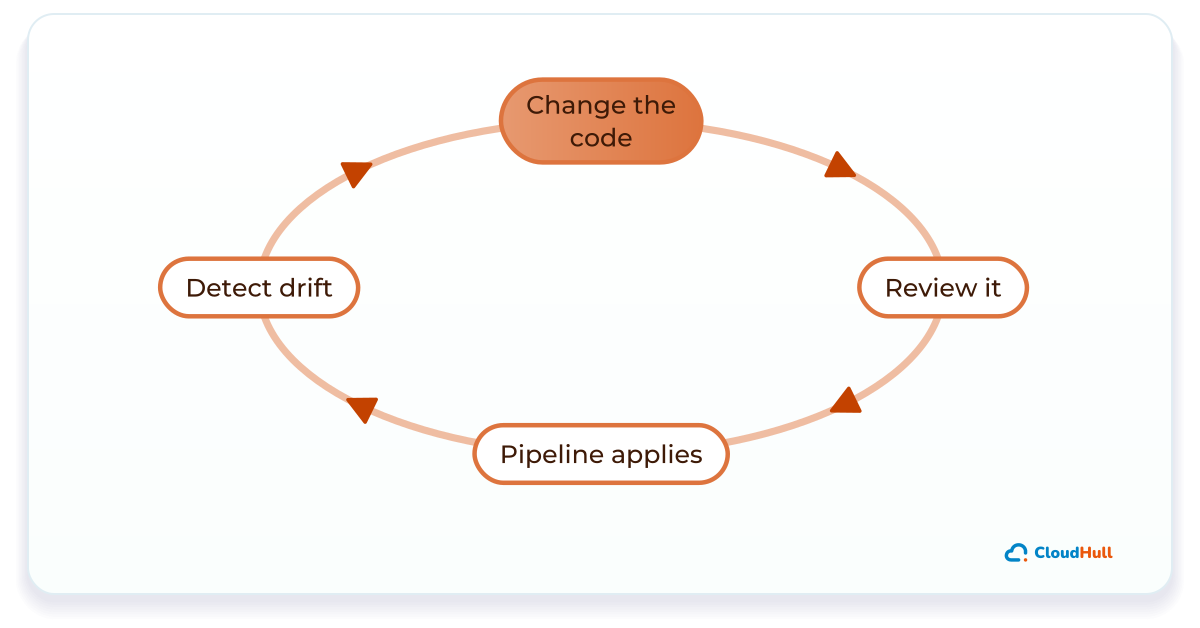
Avoid this: Writing infrastructure code once and then editing resources by hand. Drift turns the code into fiction within a few months.
Infrastructure code also makes automation possible at the next level, which I cover in cloud DevOps automation.
5. Shift Security Left Without Blocking Everyone
Add dependency scanning, secret detection, container image checks and policy rules to the pipeline. Finding a vulnerable library on a pull request costs minutes. Finding it in production costs an incident.
Do this: Start by blocking only critical findings and report the rest. Tighten the rules as the backlog shrinks and give developers fix suggestions, not just alerts.
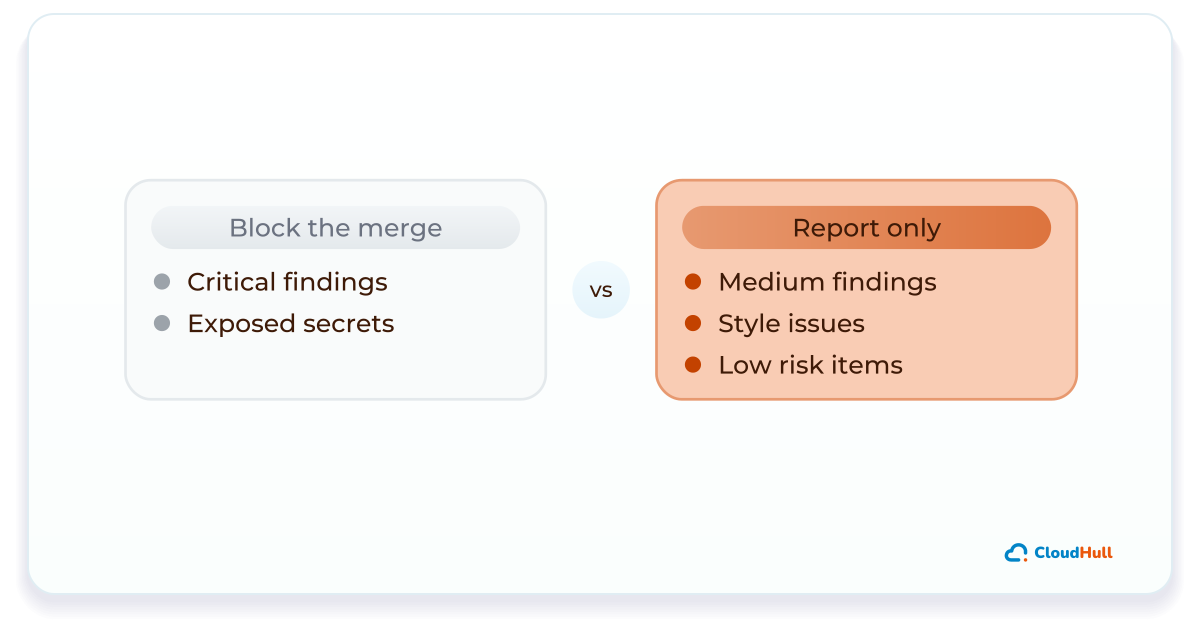
Avoid this: Turning on every scanner at maximum strictness on day one. Developers will find ways to bypass the pipeline or ignore every result.
6. Monitor What Users Feel, Not Just Servers
CPU graphs do not tell you whether customers can check out. Track a few service-level measures such as error rate, latency and availability for key user journeys, and alert on those. Page people only when a human needs to act.
Do this: Write a short runbook for each alert that pages someone. After every incident, delete or fix any alert that did not help.
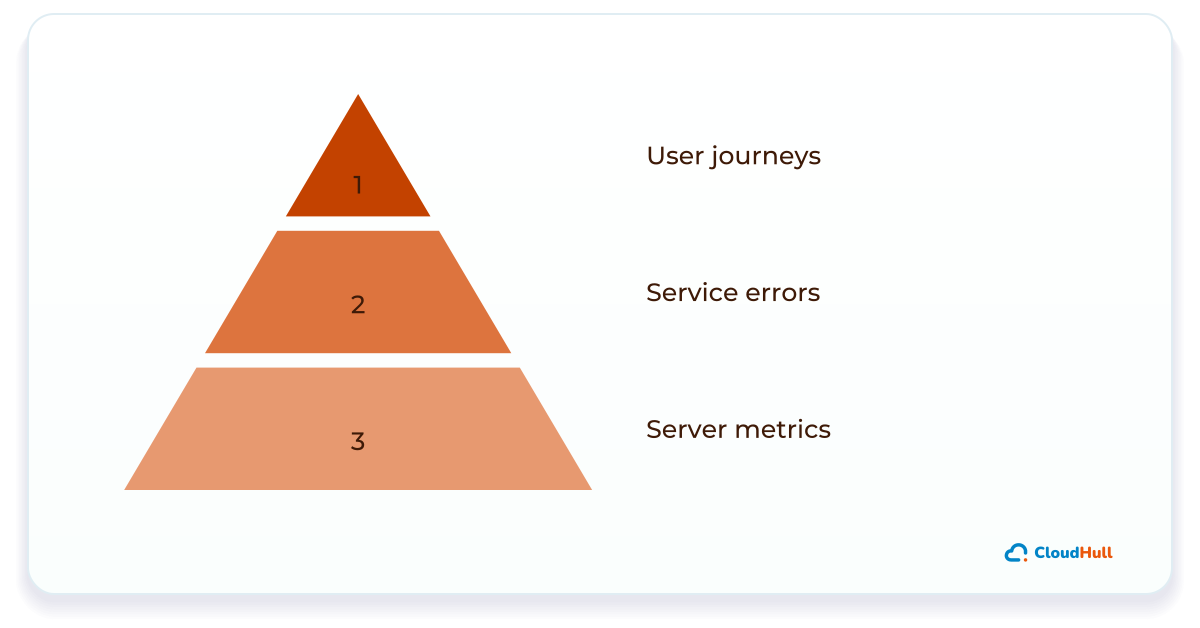
Avoid this: Alerting on every metric that moves. Noisy alerts train people to ignore the one that matters.
7. Measure Delivery and Learn From Failure
You cannot improve what you do not measure. The four measures from the DORA research, deployment frequency, lead time for changes, change failure rate and time to restore, give a balanced picture of speed and stability. Review them monthly as a team, not as a ranking.
Do this: Hold blameless post-incident reviews and turn each one into one or two concrete changes with owners. Share the summaries so other teams learn from them.
Avoid this: Using the numbers to compare or punish teams. People will game the metrics, and you lose the honest data.
What a Realistic First Month Looks Like
I suggest teams pick one service and one rule per week instead of a grand program. Week one: put the pipeline definition and a basic README in the repository and agree on pull request size. Week two: automate build and tests on every commit and make the result visible to everyone. Week three: script the deployment to a staging environment from code. Week four: add one alert on a user-facing measure and write its runbook.
At the end of the month, measure the four numbers again. Even a modest gain, such as cutting lead time from days to one day, gives you a story that persuades the next team. In my experience the second service takes about half the effort, because the templates and habits already exist.
Which Rule to Apply First
The order depends on your pain. If releases are scary, start with small changes and an automated pipeline (rules 1 and 3). If environments are unpredictable, start with version control and infrastructure as code (rules 2 and 4). If production surprises you, start with monitoring and measurement (rules 6 and 7). Security (rule 5) fits in alongside whichever you start with.
| Your main pain | Start with | Then add |
|---|---|---|
| Releases are risky and rare | Rules 1 and 3 | Rule 7 to measure the change |
| Environments differ and break | Rules 2 and 4 | Rule 3 to automate deploys |
| You hear about outages from customers | Rule 6 | Rule 7 for post-incident reviews |
| Audits and partner reviews worry you | Rule 5 | Rules 2 and 4 for evidence |
A sequence helps because teams fail when they change everything at once. The step-by-step version of that sequence is in my guide to DevOps implementation. And when the rules meet real organizations, the DevOps challenges article covers what gets in the way.
Four Numbers That Show Whether the Rules Work
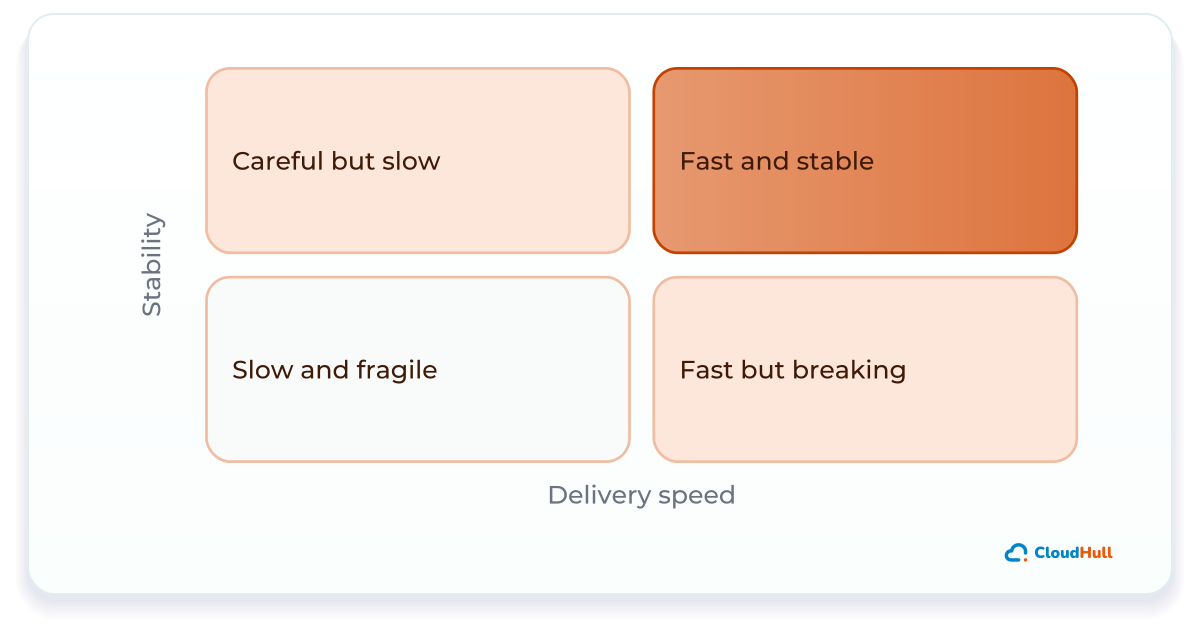
The DORA research program identified four measures that track software delivery performance. They are useful because they balance speed against stability, so you cannot improve one by quietly sacrificing the other.
| Measure | What it reveals | What to watch for |
|---|---|---|
| Deployment frequency | How often you release to production | Falling frequency usually means rising batch size |
| Lead time for changes | Time from commit to production | Long waits point to manual approvals or slow tests |
| Change failure rate | Share of releases that cause a problem | A rise after you speed up means your checks are too thin |
| Time to restore | How fast you recover from a failure | Slow recovery points to weak monitoring or rollbacks |
Record a baseline before you change anything. Even rough numbers from your ticketing and deployment history are better than a feeling, and a three-month trend beats any single snapshot.
How to Make the Rules Stick
Rules written in a wiki do not change behavior. The pipeline has to enforce them: required reviews, mandatory scans, blocked direct pushes to main. Where enforcement is not possible, make the right path the easy path with templates and paved paths that already contain the practice.
Assign an owner to each rule and review adoption once a quarter. If a rule is ignored by half the teams, ask why before you blame the teams. Usually the rule is too heavy or the tooling does not support it yet.
Sources
Questions About DevOps Best Practices
What Are the Most Important DevOps Best Practices?
Small frequent changes, everything in version control, an automated pipeline, infrastructure as code, security checks in the pipeline, user-focused monitoring and regular measurement. If you can only start with two, take small changes and pipeline automation.
How Long Does It Take to Adopt These Practices?
Expect a first visible improvement in four to eight weeks for one service. Spreading the practices across several teams usually takes two to three quarters, depending on how much manual work you have today.
Do These Practices Work for Small Teams?
Yes, and small teams often move fastest. Four engineers can run a pipeline, infrastructure code and basic monitoring with a few well-chosen tools. The rules stay the same, the tooling stays lighter.
Is DevOps a Team or a Set of Practices?
It is a set of practices that bring development and operations closer together. Some companies create a platform team to provide paved paths, but the rule is shared ownership of delivery and reliability, not a separate DevOps silo.
Which Tools Do I Need to Follow These Practices?
A Git host with CI/CD, an infrastructure as code tool, a container or deployment platform, a monitoring tool and a security scanner. The ranking of DevOps tools in this cluster compares the main options, and many are free to start.
How Do I Convince Management to Invest in DevOps?
Show the cost of the current process: engineer hours spent on manual releases, incident count and time to recover. Pair it with a small pilot that improves one measure within a quarter. Results persuade better than slides.
What Is the Biggest Mistake Teams Make?
Buying tools before fixing the process. A fancy pipeline on top of long-lived branches, manual approvals and unclear ownership just makes the old problems faster. Start with the way work flows, then automate it.
Please note: this guide is general information and not legal, financial or tax advice. Numbers and examples are typical-project estimates; confirm current details with your providers and advisers.
Did this article help you?
Thanks, noted.
Garrett Linville
Garrett leads the Cloud Hull editorial team and works with the consultants to turn real client projects into practical guides on cloud migration, DevOps, security and cost control. Each article is edited together with the consultant who did the work, and every price and limit is checked against current provider documentation. He is based in the USA and works remotely.