86 Workloads Moved, Zero Downtime
“We had a data center lease ending in six months. Cloud Hull sorted our workloads into waves, ran test cutovers and moved 86 of them on schedule. Customers saw no outage, and the lease was not renewed.”
Strategy & Migration
Architecture & Infrastructure
DevOps & Cloud Native
Security & Cost Control
Data & Business Platforms
You pick the right cloud ERP, move your data cleanly and go live with integrations that work. You start with a free first call and strategy workshop.

Cloud ERP consulting is a service that helps your business choose a cloud-based enterprise resource planning system, prepare your data and processes, connect it to the rest of your software and go live without disrupting your month-end. You start with your finance, inventory and order processes, not with a vendor demo.
A cloud ERP replaces a patchwork of spreadsheets, accounting software and old on-premises systems with one platform for finance, purchasing, inventory, orders and reporting. The vendor runs the infrastructure and ships updates, so your effort moves from servers to configuration, data and process design.
In practice, the work covers requirements and process mapping, a shortlist scored against your needs, a five-year cost model, data cleanup and migration, integration with your bank, CRM, warehouse and ecommerce tools, user training, a rehearsed go-live and support through your first closes.
A good engagement covers the full path from first requirement to a calm first month-end, so you never end up with a half-configured system and a stressed finance team.
Spreadsheets, double entry and slow closes pile up quietly. Yet many teams keep patching an old system until growth forces a rushed decision, when a planned selection costs far less than a rescue.
Data is exported, merged in spreadsheets and checked by hand. Finance waits days for numbers that should be there on day one.
Decisions made on last month's picture
Old on-premises software needs servers, upgrades and specialists. The cost sits in several budgets, so nobody sees what it really costs.
Spend nobody can add up in one place
Orders are keyed twice and stock levels differ between tools. Small mismatches turn into refunds, delays and arguments.
Mistakes caught after the customer sees them
ERP projects touch finance, sales and operations. Without one accountable person, decisions stall and scope grows.
Extra months added to the plan
ERP projects that go wrong usually started with a demo, not with a list of what the business has to do. Yours starts with your processes, your data and the decisions finance needs each month.
From there you get a shortlist scored on evidence, a cost model that shows the full five years and a plan for data and integrations. Every customization is questioned before it is built, and your team stays involved at each step.
If you’re going to replace your ERP, the order of decisions matters more than the speed. Choosing the system last, after the processes and data are understood, keeps your costs predictable and your go-live calm. Start with a clear map, score the shortlist and build from there.
You talk through your current systems, your growth plans and what slows your team down. Your consultant asks about entities, volumes and integrations and points out where the risk sits.
A short written version you can circulate before deciding.
Your processes are mapped, requirements are ranked and the shortlist is scored. Costs are modeled over five years, including implementation and support.
Clear recommendation, timeline and one fixed price for the first phase.
The system is configured, data is loaded in test runs and users try real scenarios. Your team approves each result before the next stage starts.
With reconciled opening balances, working integrations and trained users.
Your account manager supports the cutover, the first month-end and the first quarter, and tracks open issues until they are closed.
Documentation, training and support whenever you need it.
Choose a single service or get the full program, from selection to ongoing support.
Finance, sales and operations agree what the system must do before vendors are scored.
Two or three systems rated against your requirements, integrations and industry.
Subscription, implementation, integrations and support in one view, so there are no blind spots.
Customers, vendors, items and balances loaded in test runs and reconciled before go-live.
Your bank, CRM, warehouse and ecommerce tools connected with clear data ownership.
Your team is trained before launch and supported through the first closes.


“We had a data center lease ending in six months. Cloud Hull sorted our workloads into waves, ran test cutovers and moved 86 of them on schedule. Customers saw no outage, and the lease was not renewed.”
“Releases were a Friday event with three people on call. Cloud Hull built a CI/CD pipeline, added automated tests and set up infrastructure as code. We now deploy daily, and rollbacks take minutes instead of an evening.”
“On the discovery call they asked about our actual workloads instead of pitching a platform, and told us two systems should stay where they were. That honesty is why we hired them. The work since has been practical and well documented.”
Where the friction sits today, and what changes once one system runs the business.
Why outside help pays off when you choose and launch an ERP.
Vendors show their best features. A neutral scoring of your own requirements shows which system handles your hard cases, such as multi-entity consolidation, project billing or lot tracking, before you have signed.
Subscription is only one line. Implementation, integrations, extra environments, training and support add up. A five-year model puts them side by side, so the cheapest quote is not the most expensive project.
Every custom request is tested against a simple rule: can a standard setting do this? That keeps upgrades easy and your budget on track, because customizations are the most common cause of overruns.
Test loads, reconciled opening balances and a go-live date placed after a close, not before one, protect your finance team in the weeks that matter most.
Every project gets a fixed quote after the requirements and selection phase. The table shows what usually shapes the scope, so you can place your own project before the call.
| Project size | Typical scope | Cost drivers | Typical timeline |
|---|---|---|---|
| Small business | Finance, purchasing and inventory for one entity, a few integrations | Number of users, data volume, integrations | 3 to 6 months |
| Mid-market company | Several entities or sites, manufacturing or distribution modules, data migration | Modules, entities, customization, reporting | 6 to 12 months |
| Complex or regulated business | Multi-country rollout, advanced consolidation, strict audit trails | Localization, compliance evidence, parallel running | 12 months or more |
You receive a fixed quote after selection, with no hidden extras and no surprise invoices.
If your current system still works with a few fixes, you hear it on the first call, along with why.
You get short weekly updates on what is done, what is blocked and what is needed from you.
You leave the call with a summary of priorities, timing and likely cost that your colleagues can review.

Every vendor can show a polished demo. You score each system on your hardest scenarios, such as a split shipment, a multi-entity close or a revenue schedule, and compare the results side by side.
The scoring also covers the partner who will implement it, because the team on your project matters as much as the software. You see the full reasoning in writing.

Bad data is the most common reason a go-live goes wrong. Records are cleaned, mapped and loaded in test runs, then reconciled against the source until the numbers match.
Your finance team approves opening balances before the cutover. See cloud migration consulting if you also move other systems at the same time.
Where the work starts in your sector.
Plan roles, approvals and audit trails around strict reporting, with every integration documented. Learn more about cloud security consulting for sensitive financial data.
Connect storefronts, marketplaces and warehouses so stock and orders match in real time. Pair the ERP with cloud cost optimization to keep spend under control, and review cloud architecture consulting for the integration layer.
Handle subscription billing, revenue recognition and multiple entities without spreadsheets. See cloud strategy consulting for the longer technology plan.
Track inventory, lots and purchasing across locations, with clear costing and a path to add production modules later.
The right partner makes the difference between an ERP your team trusts and a project that eats a second budget. Before you sign, check that your cloud ERP consulting partner can show you each of these:
Also ask who owns the system after go-live. You should receive documentation and training, so the knowledge stays inside your business.
Know exactly what you pay before any project work starts.
Full-service, end-to-end consulting at a price that fits your first phase.
One contact who knows your project and answers your questions fast.
Least-privilege access, documented data flows and NDAs on request.
The right choice depends on your size, your industry and how much you want to adapt your processes. Your assessment scores two or three shortlisted systems against your real requirements, your integrations and the total cost over five years. You see the scoring in writing, so the decision is yours and based on evidence.
A small company with a focused scope often goes live in three to six months. A mid-sized business with several entities, integrations and data migration usually needs six to twelve months. You get a dated plan after the assessment, with go-live checkpoints you can hold the team to.
Cost has three parts: subscription, implementation and ongoing support. Subscription is priced per user or by modules and usage, and several vendors only publish prices on request. Implementation often costs a multiple of the first-year subscription. You get a realistic range on your free discovery call and a fixed quote after the assessment.
Yes. Few companies run everything in one system. Your plan documents which functions live in the ERP, which stay in specialist tools such as a warehouse or CRM system, and how data moves between them. Integration is designed early, because late integration is a common source of overruns.
Data is cleaned before it moves, not after. Customers, vendors, items and open balances are mapped, loaded in test runs and reconciled against the source. Your finance team signs off on opening balances before go-live, so nobody discovers a gap at month-end.
Major cloud ERP vendors publish security certifications and run their own data centers or use large cloud providers. Your part of the security is access control, role design and integrations. Your assessment reviews roles, segregation of duties and the connections to your bank and other systems.
Unclear scope, poor data quality, too much customization and weak ownership on your side are the usual causes. Each has a control in the plan: a signed scope, data cleanup waves, a rule of fit before custom code and a named internal owner for every module.
Yes. Your consultant works alongside the vendor or implementation partner and represents your interests. That includes reviewing the statement of work, challenging estimates and checking that the configuration matches the requirements you signed off.
Your account manager stays involved through the first month-end and quarter-end closes, tracks open issues and helps your team handle the first upgrade cycle. You also receive documentation and training. If you want ongoing support, it is available in 5+ languages.
Yes. A short review of scope, budget, data and the partner relationship shows whether the project needs a reset or a few targeted fixes. You get a written recommendation, and you decide what happens next.
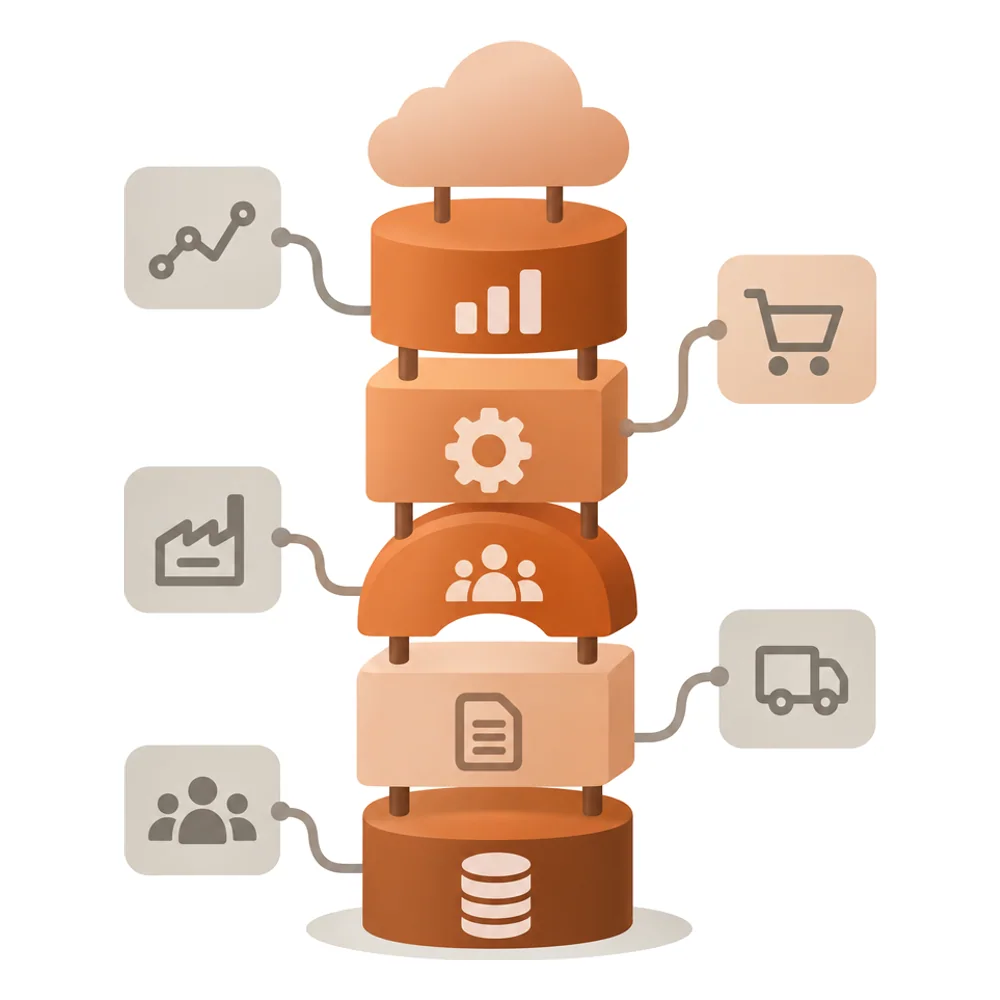
Get a free discovery call and a clear first-phase plan for your ERP.