Main Points
- Match the ERP to your industry first: finance-led, distribution and manufacturing needs point to different systems.
- Business Central and Dynamics 365 Finance publish per-user prices, and most others quote on request.
- Implementation, data migration and integrations often cost more than the first year of subscription.
- Shortlist two or three systems and test each on your hardest scenario before you sign.
The Best Cloud ERP Software at a Glance
| System | Type | Best for |
|---|---|---|
| 1. Oracle NetSuite | Cloud ERP for growing and mid-sized companies | Companies that want finance, inventory, ecommerce and CRM in one cloud suite |
| 2. Microsoft Dynamics 365 Business Central | Cloud ERP for small and mid-sized businesses | Microsoft-centric companies that want ERP close to Excel, Outlook and Power BI |
| 3. SAP Cloud ERP | Enterprise-grade cloud ERP (SAP S/4HANA Cloud) | Mid-market and larger companies that want a standard, best-practice process model |
| 4. Oracle Fusion Cloud ERP | Enterprise cloud ERP suite | Larger companies with complex finance, procurement and reporting needs |
| 5. Acumatica | Cloud ERP with resource-based pricing | Growing companies with many users that want predictable pricing |
| 6. Sage Intacct | Cloud financial management | Finance teams that need strong accounting, reporting and multi-entity consolidation |
| 7. Odoo | Modular ERP with open source roots | Small and mid-sized companies that want modular apps and a lower entry price |
| 8. Epicor Kinetic | Cloud ERP for manufacturers and distributors | Discrete manufacturers that need shop-floor and supply chain depth |
| 9. Infor CloudSuite Industrial | Industry cloud ERP for manufacturers | Machinery, electronics, metal and plastic fabricators and similar manufacturers |
| 10. Sage X3 | Mid-market ERP for manufacturing and distribution | Mid-sized companies that need finance plus production and distribution in one system |
| 11. Microsoft Dynamics 365 Finance | Enterprise finance and operations | Larger Microsoft-centric companies with complex finance operations |
The 11 Best Cloud ERP Systems, Ranked
I start with the suites I see most often in mid-sized companies and then move to finance-first and manufacturing specialists. Keep in mind that the software is only part of the result. In the cloud ERP consulting projects I review, data quality and process ownership matter more than the brand name.
Oracle NetSuite
The Broadest All-in-One Suite for Growing Companies With Several Entities
NetSuite is a cloud ERP suite from Oracle that covers financials, inventory, order management, procurement and reporting, with options for ecommerce and CRM. It is built for businesses that have outgrown accounting software and need one system for several departments.
In my client work, NetSuite is the system I see most often when a company adds a second entity or a second country. Its strength is breadth. The cost is that configuration and partner fees can match or exceed the first-year subscription, so ask for the full five-year view. My cloud ERP cost guide shows how I model it.
Oracle NetSuite Strengths
- Finance, inventory and order management in one suite
- Handles several entities, currencies and subsidiaries
- Large partner network and plenty of implementation experience
Oracle NetSuite Weaknesses
- Customization and implementation can be a large share of the cost
- Quote-based pricing makes early comparison harder
Oracle NetSuite Pricing
NetSuite pricing is quote-based. I could not read a public price list, so I do not quote figures. Ask for the license, modules, user types, implementation and support costs on one sheet.
Oracle NetSuite Reviews
- G2: 4.1 of 5 stars (based on 5,258 verified reviews)
Microsoft Dynamics 365 Business Central
The Natural Choice for Microsoft Shops That Want a Familiar Feel
Business Central covers finance, sales, purchasing, inventory and operations, with service management and manufacturing in the Premium plan. It works closely with Microsoft 365, which makes day-to-day use familiar for many teams.
I like it for companies of 20 to 300 people who want a recognizable interface and a large pool of partners. Check the partner, not just the product, because the quality of implementation varies a lot. For smaller teams, the lighter path in cloud ERP for small business shows what to include first.
Microsoft Dynamics 365 Business Central Strengths
- Familiar Microsoft interface and integrations
- Published per-user prices make a first budget easy
- Large partner ecosystem
Microsoft Dynamics 365 Business Central Weaknesses
- Deep industry features often need add-ons from partners
- Very complex multi-entity needs may outgrow it
Microsoft Dynamics 365 Business Central Pricing
Microsoft lists Essentials at $80 per user per month and Premium at $110 per user per month, billed yearly, plus Team Members at $8 per user per month for limited access. A free 30-day trial is offered. Microsoft notes prices may vary by currency, country and region.
Microsoft Dynamics 365 Business Central Reviews
- G2 rating: not read at the time of writing. Check the G2 listing for current reviews.
SAP Cloud ERP

The Heavyweight for Companies That Want Standard Processes and Global Reach
SAP Cloud ERP, known as SAP S/4HANA Cloud, brings SAP’s ERP into a vendor-run cloud model. It is designed around standard, best-practice processes and is aimed at mid-sized and large companies.
The trade-off is discipline. SAP rewards companies that adopt standard processes and punishes heavy customization. In my experience, the projects that go well have a strong internal owner and a firm rule of fit before custom code. Be ready for a serious implementation, and read my overview of cloud ERP risks before you start.
SAP Cloud ERP Strengths
- Deep functionality and global coverage
- Standard processes reduce long-term maintenance
- A trusted name with auditors and large customers
SAP Cloud ERP Weaknesses
- Heavier than most mid-market needs
- Implementation requires a capable partner and internal ownership
SAP Cloud ERP Pricing
SAP did not publish prices on the pages I could read. Pricing depends on edition, scope and users, and you should request a written quote with implementation costs separated.
SAP Cloud ERP Reviews
- G2: 4.4 of 5 stars (based on 1,104 verified reviews)
Oracle Fusion Cloud ERP
The Enterprise-Grade Finance Suite for Complex, Multi-Country Operations
Oracle Fusion Cloud ERP is Oracle’s cloud suite for financials, procurement, project management and risk management. It is a step above NetSuite in scale and complexity.
I put it on the shortlist for companies with demanding finance requirements, such as complex consolidation or global compliance. Mid-sized companies often find it more than they need. If you are weighing it against NetSuite, ask both vendors to run the same hard scenario, such as an intercompany close, and compare the results.
Oracle Fusion Cloud ERP Strengths
- Deep finance, procurement and project functionality
- Built for multi-country and multi-entity reporting
Oracle Fusion Cloud ERP Weaknesses
- Larger than most mid-market companies need
- Implementation effort and cost are high
Oracle Fusion Cloud ERP Pricing
I could not read a public price list for Oracle Fusion Cloud ERP. Expect a quote based on modules and users, and ask for implementation and support costs separately.
Oracle Fusion Cloud ERP Reviews
- G2 rating: not read at the time of writing. Check the G2 listing for current reviews.
Acumatica
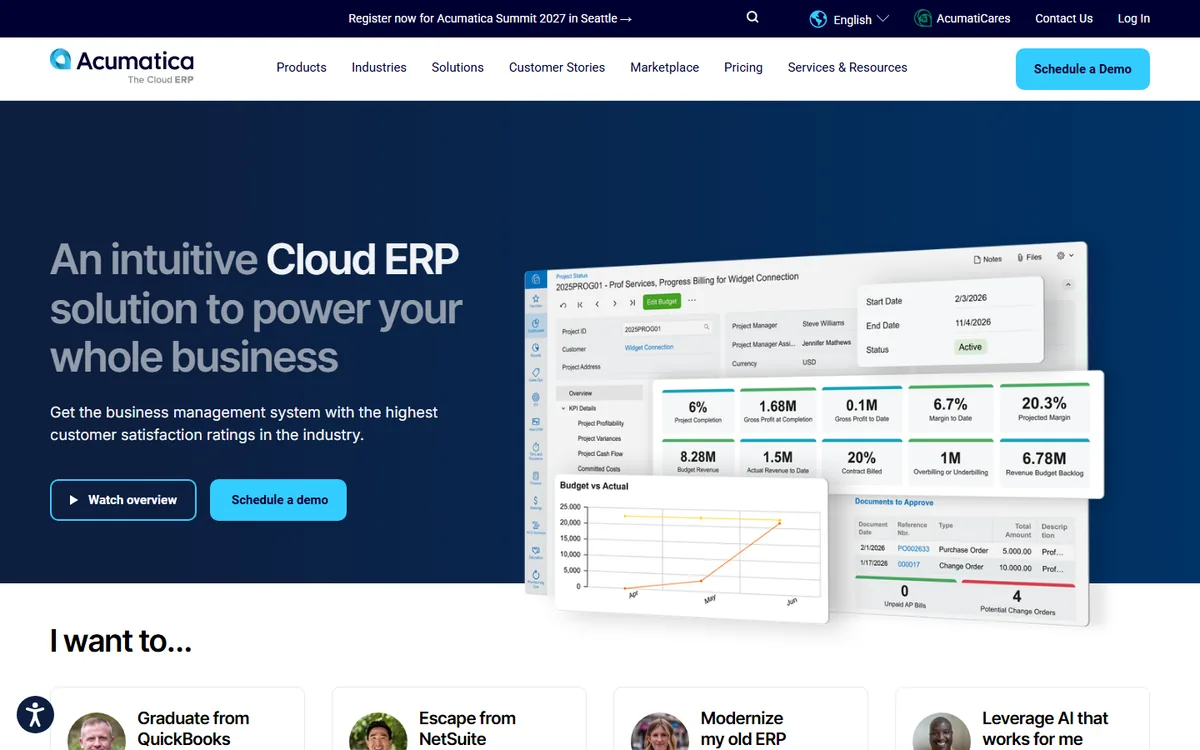
The Pick for Companies Tired of Paying for Every User Seat
Acumatica is a cloud ERP with industry editions for construction, manufacturing, distribution and other sectors. It states that you pay for functionality, not for user seats, and that cost is based mainly on the number of applications you implement.
That model suits businesses where many people need access, such as field teams or approvers. In my client work, I check how the resource limits work and how the price changes as transaction volumes grow. A good partner will explain those breakeven points before you sign.
Acumatica Strengths
- Unlimited users pricing model
- Industry editions with relevant features
- Flexible deployment options, explained by a partner
Acumatica Weaknesses
- Pricing is not public, so you need a quote to compare
- Smaller partner network than the largest vendors
Acumatica Pricing
Acumatica states pricing is tailored using applications, business usage and resources, and the license option. It states the model is not priced per user seat. No figures are published on the pricing page.
Acumatica Reviews
- G2: 4.4 of 5 stars (based on 2,055 verified reviews)
Sage Intacct

The Finance-First Choice When Accounting Depth Matters Most
Sage Intacct is a cloud financial management system, and Sage calls it the first and only AICPA preferred financial management solution. It focuses on accounting, consolidation and reporting more than on inventory or manufacturing.
I recommend it to services, software and nonprofit-style organizations where the finance team drives the choice. If you need deep warehouse or production features, you will add other systems and connect them. Plan those integrations early, as the cloud ERP examples in my library show.
Sage Intacct Strengths
- Strong accounting, consolidation and reporting
- Good fit for multi-entity finance teams
- Connects to specialist systems through integrations
Sage Intacct Weaknesses
- Lighter on inventory and manufacturing than full ERP suites
- Pricing is not public
Sage Intacct Pricing
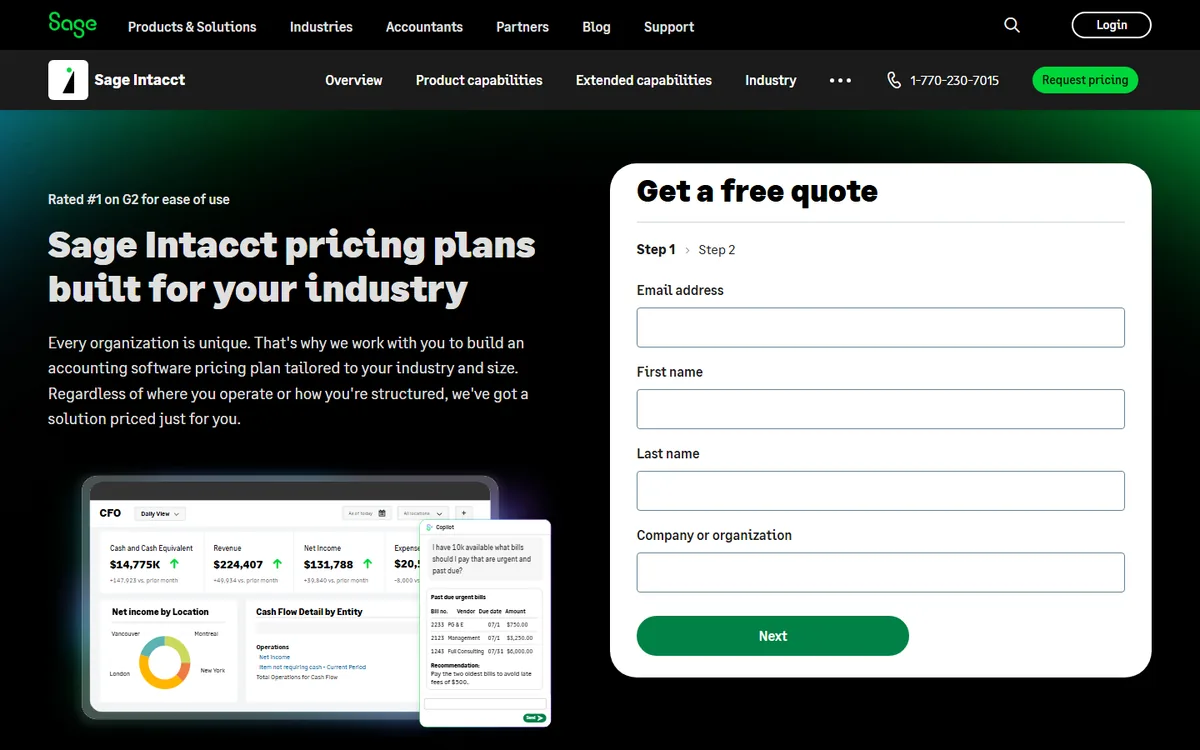
Sage’s page did not describe pricing or list figures, so ask for a quote and request the cost of each module and any integration connectors.
Sage Intacct Reviews
- G2: 4.3 of 5 stars (based on G2 verified reviews)
Odoo
The Flexible, Modular Option for Companies That Want to Start Small
Odoo is a modular business suite covering accounting, sales, inventory, manufacturing, ecommerce and more. It offers a hosted option and has an open source community edition, so you can start with a few apps and add more later.
The flexibility is the benefit and the risk. It is easy to add apps and customizations, and just as easy to end up with a setup nobody understands. Choose a partner with references in your industry, and keep a firm rule on custom code. The full ERP comparison shows how it compares with the others in the market.
Odoo Strengths
- Modular, so you can start with a few apps
- Competitive entry cost compared with large suites
- Open source community edition available
Odoo Weaknesses
- Quality varies between implementation partners
- Heavy customization can make upgrades harder
Odoo Pricing
Odoo’s pricing page could not be read when I checked, so I do not quote figures. Check the current per-user plans and hosting options on the vendor’s site.
Odoo Reviews
- G2: 4.2 of 5 stars (based on 370 verified reviews)
Epicor Kinetic
The Manufacturing-Focused Pick When Shop-Floor Detail Matters
Epicor Kinetic is a cloud ERP built mainly for manufacturers and distributors, with production, planning and supply chain features. It is a good fit when your process is more complex than a general-purpose ERP handles.
I would not choose it for a services firm. For a mid-sized manufacturer, it is worth a close look. Its G2 rating is lower than many others on this list, so read recent reviews and ask for references from companies of your size.
Epicor Kinetic Strengths
- Deep manufacturing and distribution features
- Cloud deployment with industry focus
Epicor Kinetic Weaknesses
- Lower G2 rating than several competitors
- Less suited to services and software companies
Epicor Kinetic Pricing
Epicor’s page could not be read, and I do not quote figures. Ask for a quote with modules, users and implementation listed separately.
Epicor Kinetic Reviews
- G2: 3.9 of 5 stars (based on 740 verified reviews)
Infor CloudSuite Industrial
The Specialist Choice for Discrete Manufacturers With Industry-Specific Needs
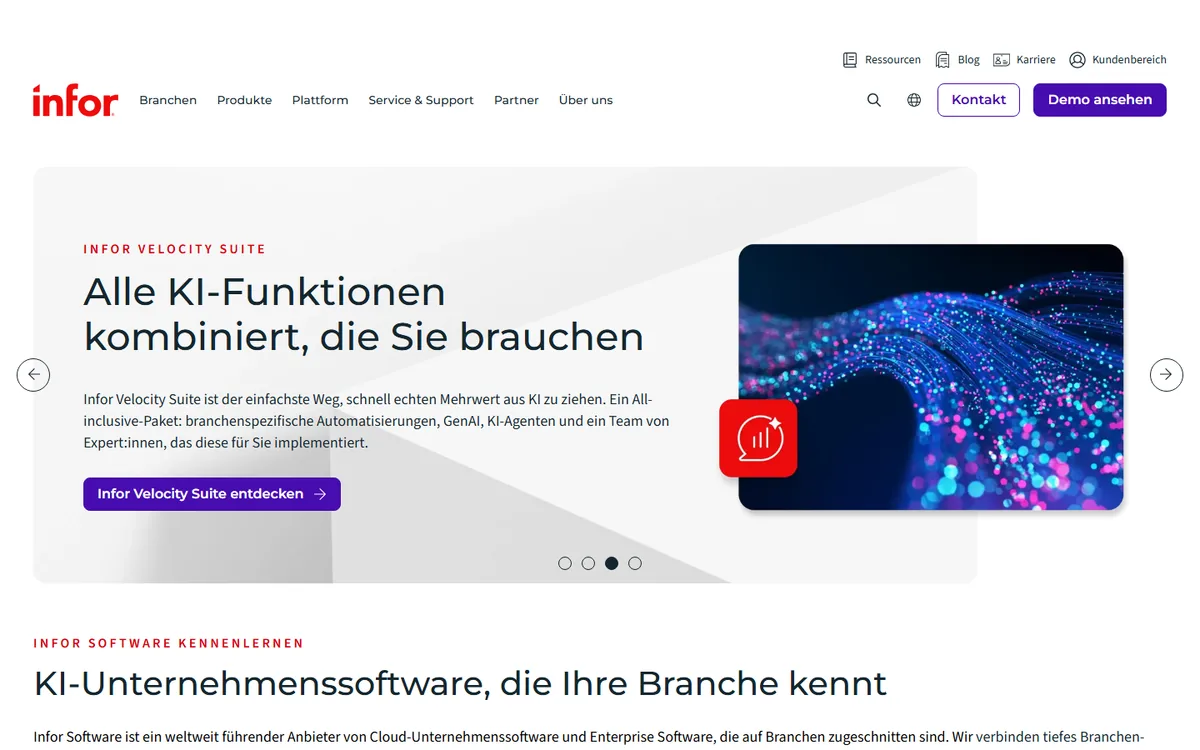
Infor describes CloudSuite Industrial as cloud-based, industry-specific software for industrial manufacturers, hosted on AWS. It comes in an enterprise version built on Infor LN and a version for small and midsize manufacturers built on SyteLine.
Infor lists micro-vertical functionality for machinery, electronics, metal fabrication, plastics, medical devices, furniture and windows and doors. That is its edge, and its limit: it is not a general-purpose choice. Compare it only if you are a manufacturer.
Infor CloudSuite Industrial Strengths
- Built for specific manufacturing sub-industries
- Two versions for different company sizes
- Extensions such as MES, WMS and PLM
Infor CloudSuite Industrial Weaknesses
- Narrow fit outside manufacturing
- Lower G2 rating than the broader suites
Infor CloudSuite Industrial Pricing
Infor’s page lists no pricing for CloudSuite Industrial. It mentions a flat-fee AI package, Infor Velocity Suite, as a separate item, so ask for a quote for the ERP itself.
Infor CloudSuite Industrial Reviews
- G2: 3.8 of 5 stars (based on 74 verified reviews)
Sage X3
The Mid-Market Option for Companies Moving Beyond Entry-Level Software
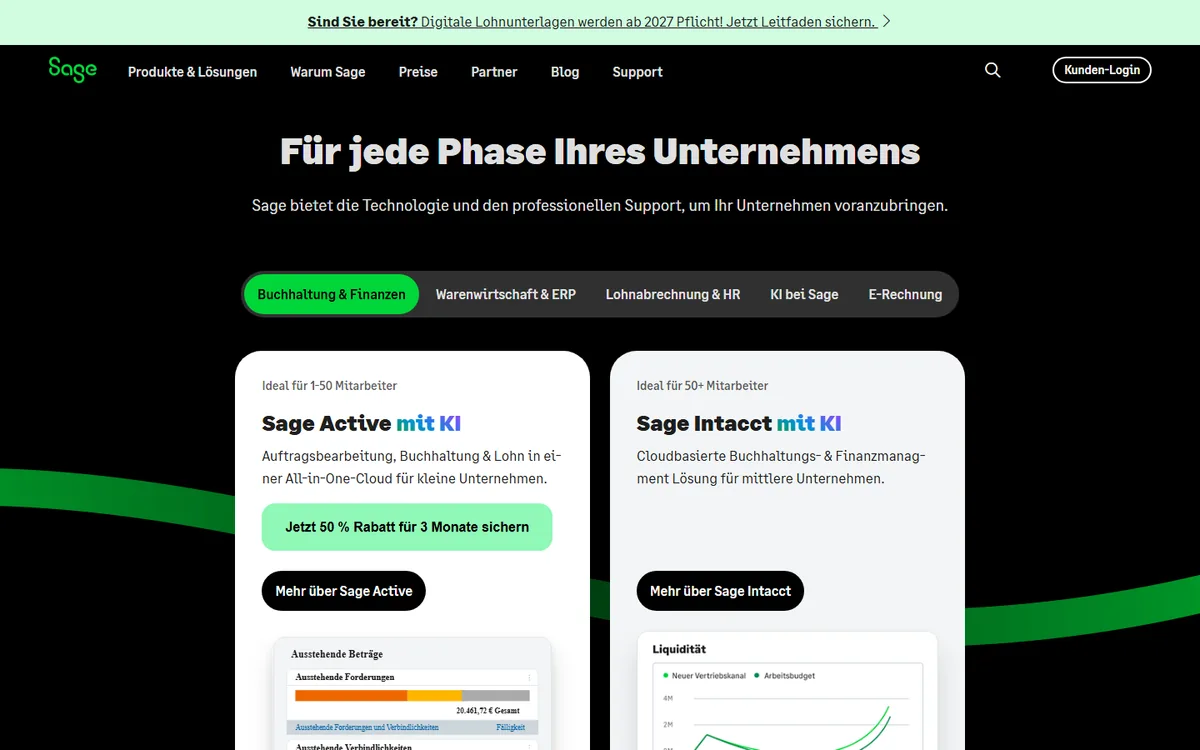
Sage X3 is a mid-market ERP for manufacturing, distribution and services, covering finance, supply chain and production. It sits between small business accounting and enterprise suites.
In my experience, it works best when you have a clear partner and a limited set of customizations. Read recent reviews carefully, as its G2 rating is lower than several competitors. As with every system here, test it with your hardest scenario before you commit, and read how cloud ERP trends may change your shortlist.
Sage X3 Strengths
- Covers finance, distribution and production
- Positioned for mid-sized, multi-site companies
Sage X3 Weaknesses
- Lower G2 rating than several alternatives
- Smaller ecosystem than the largest vendors
Sage X3 Pricing
Sage’s page could not be read, so I do not quote figures. Ask your partner for a quote with licenses, modules, implementation and support on separate lines.
Sage X3 Reviews
- G2: 3.8 of 5 stars (based on 57 verified reviews)
Microsoft Dynamics 365 Finance
The Step Up From Business Central for Larger, Complex Finance Teams
Dynamics 365 Finance is Microsoft’s cloud finance system for larger organizations, with a Premium plan that adds advanced business performance management. It is the natural next step when Business Central is too small.
It costs more per user than Business Central, and implementation needs a serious partner. I see it most in companies with several legal entities and a strong Microsoft footprint. If your needs are simpler, start with Business Central and save the budget.
Microsoft Dynamics 365 Finance Strengths
- Strong fit with the Microsoft stack
- Advanced finance features for larger teams
Microsoft Dynamics 365 Finance Weaknesses
- Per-user price is much higher than Business Central
- Needs a capable partner and a larger project
Microsoft Dynamics 365 Finance Pricing
Microsoft lists Dynamics 365 Finance at $210 per user per month and Finance Premium at $300 per user per month, billed yearly. Microsoft notes prices are informational and the actual price appears at checkout.
Microsoft Dynamics 365 Finance Reviews
- G2 rating: not read at the time of writing. Check the G2 listing for current reviews.
How to Choose the Right Cloud ERP
In my experience, your industry and size decide most of the choice. Before you compare vendors, answer four questions:
- Is your core need finance, or do you also need inventory and production?
- How many entities, currencies and users do you have today and in three years?
- Which systems must the ERP connect to, such as your bank, CRM or store?
- Who inside your company owns the project and each module?
Finance-led companies should start with Sage Intacct, NetSuite and Business Central. Manufacturers should compare Epicor, Infor and Sage X3. Large or complex groups should look at SAP and Oracle Fusion. Whichever you shortlist, ask each vendor to run your hardest scenario, and ask the partner for two references of your size. If you want help scoring the shortlist, a short consulting call starts exactly there.
Questions About Choosing Cloud ERP Software
What Is the Best Cloud ERP for Small and Mid-Sized Businesses?
There is no single best system. NetSuite, Business Central, Acumatica, Sage Intacct and Odoo are common shortlists for small and mid-sized companies. Your industry, entities and integrations decide which one wins.
How Much Does Cloud ERP Cost?
Most vendors quote on request. Business Central lists $80 and $110 per user per month for Essentials and Premium, and Dynamics 365 Finance lists $210 and $300. Implementation often costs more than the first year of subscription, so model five years.
Is Cloud ERP Better than On-Premises ERP?
For most mid-sized companies, yes, because the vendor runs the infrastructure and ships updates. On-premises can still make sense for special latency, data residency or customization needs.
How Long Does a Cloud ERP Implementation Take?
A small company often goes live in three to six months, and a mid-sized one in six to twelve. Data migration and integrations take the most time.
Which Cloud ERP Is Best for Manufacturing?
Epicor Kinetic, Infor CloudSuite Industrial and Sage X3 are built with manufacturing in mind. Business Central Premium and Acumatica also have manufacturing editions.
Can I Switch ERP Vendors Later?
Yes, but it is a full project. Clean data, documented processes and limited customization make a later switch much easier.
Do I Need an Implementation Partner?
Almost always. The partner configures the system, loads data and trains users. Choose the partner with as much care as the software and ask for references of your size.
Important: prices, plans and ratings move quickly. They reflect our last update, so double-check each vendor’s site before purchasing. Nothing in this article is legal or financial advice.
Did this article help you?
Thanks, noted.
Garrett Linville
Garrett leads the Cloud Hull editorial team and works with the consultants to turn real client projects into practical guides on cloud migration, DevOps, security and cost control. Each article is edited together with the consultant who did the work, and every price and limit is checked against current provider documentation. He is based in the USA and works remotely.