Main Points
- A cloud infrastructure strategy settles a few hard-to-reverse choices: provider, account layout, network and access.
- Work in four phases: goals, standards, build, then review twice a year.
- Rank priorities by risk and cost of delay, and say no to the rest in writing.
- Keep the document to a few pages, owned by one named person.
Most cloud infrastructure was never planned. It accumulated. A first project chose a provider because someone knew it, accounts multiplied, and a network built in a hurry became the one everything depends on. A strategy does not rewrite history. It decides what you will do next and in what order. It is the document I help clients write at the start of every cloud infrastructure consulting engagement.
Here is the four-phase playbook I use, with the decisions that belong in each.
The Playbook at a Glance
The phases run in order, and each one ends with something you can show a colleague. The table gives the outline, and the sections below go through them.
| Phase | Main question | Output | Typical time |
|---|---|---|---|
| 1. Goals and constraints | What must the platform support, and what limits us? | One-page goals and constraints list | 1 to 2 weeks |
| 2. Standards and design | Which rules and layout will every workload follow? | Account, network, access and tagging standards | 3 to 5 weeks |
| 3. Build and migrate | In what order do we get there? | Landing zone, pipelines, moved workloads | 2 to 4 months |
| 4. Review and adjust | Is it working, and what changed? | Twice-yearly review with metrics | Ongoing |
Time ranges come from my own projects and shift with team size and how tangled the starting point is.
Phase 1: Goals and Constraints
Begin with the business, not the cloud. Write down what the platform must support in the next two years: expected traffic growth, new regions, uptime targets, data rules and the budget range. Then list the constraints. A customer contract may demand a certain region, a team may only know one provider, or a data center lease may end in eight months.
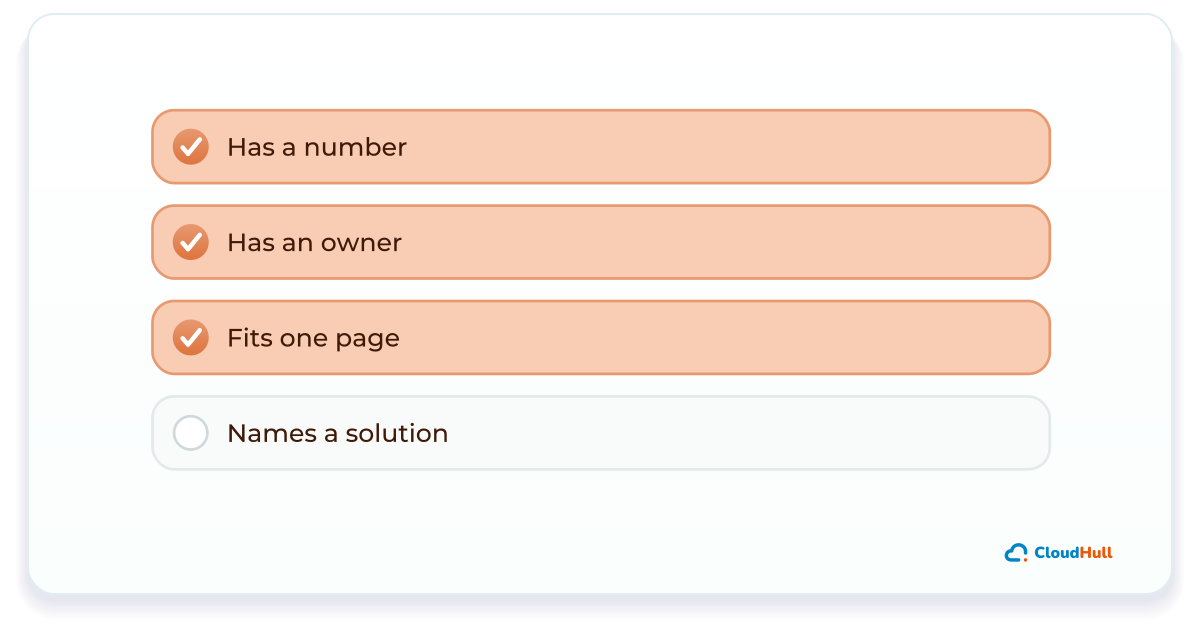
Keep the output to a page. If it takes more, you are mixing goals with solutions. Three to five goals with a number each are enough, for example uptime of 99.9% for checkout or a cost per order that falls over time.
Phase 2: Standards and Design
This phase makes the decisions that are expensive to reverse. Settle them deliberately.
Provider and Region
Choose one primary provider for reasons you can state in a sentence. Pick regions based on customer location, data rules and the services you need. Use a second provider only for a concrete requirement.
Account Structure
Separate production from non-production, and give security and logging their own accounts. Each product or team gets its own account or project, with shared services in a central one. Moving workloads between accounts later is painful, so spend time here.
Network and Access
Plan address ranges that do not overlap with each other or with your offices. Segment networks by function, and decide how people and systems reach them. Use named users, multi-factor authentication and least-privilege roles from the first day. My notes on running cloud infrastructure well cover how these choices play out in daily work.
Tagging and Cost Rules
Define required tags, such as owner, product and environment, and enforce them in code. Add rules for budget alerts, shutdown of non-production and commitment discounts.
AWS lists six pillars in its Well-Architected Framework: operational excellence, security, reliability, performance efficiency, cost optimization and sustainability. Use them as a checklist for this phase. If a design cannot answer a pillar, the gap goes in the document.
Phase 3: Build and Migrate in Waves
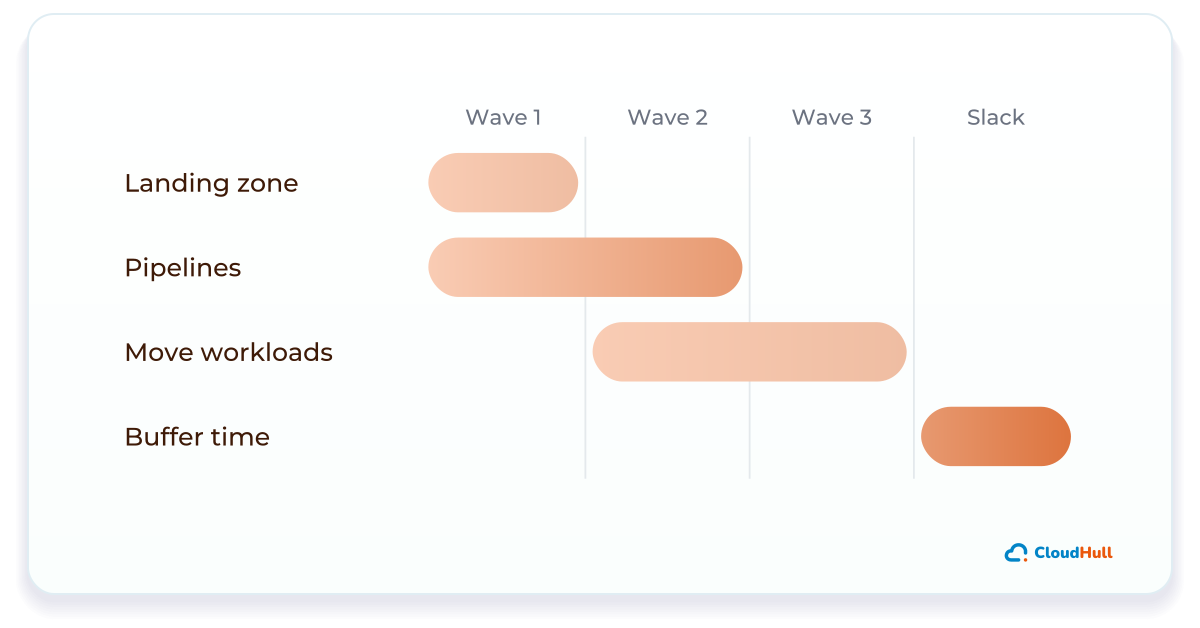
Build the foundation first: accounts, network, identity, logging and a pipeline that applies infrastructure code. Then move or create workloads in small waves. The first wave should be low-risk but real, so you test the standards on something that matters a little.
Automation belongs here, not later. Every manual setup you allow in this phase becomes a drift problem in phase 4. My guide to cloud infrastructure automation shows how to estimate what each automated job returns.
Expect delays. A realistic plan includes slack for approvals, a security review that finds something and a team member who is pulled onto an outage. I plan 20% extra time, and I have rarely regretted it.
Priorities: What to Do First, and What to Say No To
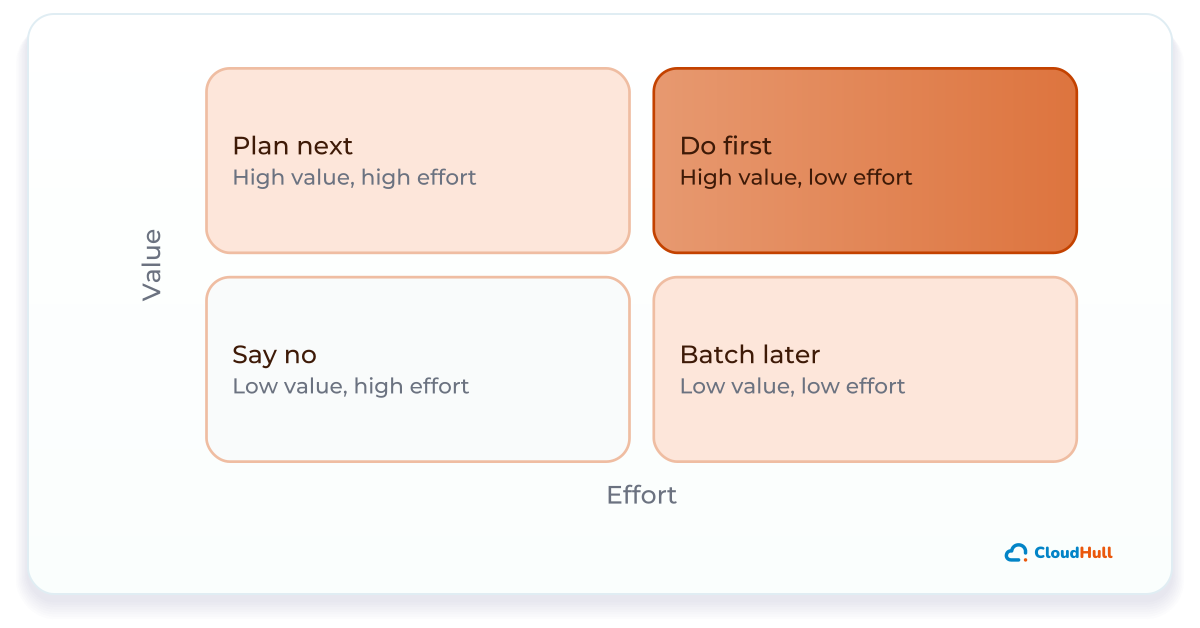
Every strategy meeting produces more ideas than a team can deliver. I rank candidates on two questions: how much risk or cost does this remove, and how much does waiting make it worse? Items that score high on both go first. Typical top items are identity and access, logging, backups and tagging, because every later project depends on them.
Say no in writing. A short list titled "not in the next two quarters" prevents the same debate from returning every month. It might include a second provider, a full container platform rewrite or a custom portal. Tool choices follow priorities, so look at my list of cloud infrastructure tools only once the standards are settled.
Phase 4: Review and Adjust
Strategy ages quickly. Set a review twice a year with a short agenda: have the goals changed, are standards followed, which exceptions pile up and what do the numbers say. Four numbers are enough: availability, cost per product, open high-risk security findings and the share of infrastructure managed by code.
Use a fresh cloud infrastructure assessment as the evidence for each review. It replaces opinion with a score you can compare with the last round.
Mistakes I See in Infrastructure Strategies
Most strategies fail in one of four ways. Knowing them helps you avoid writing the same document again in a year.
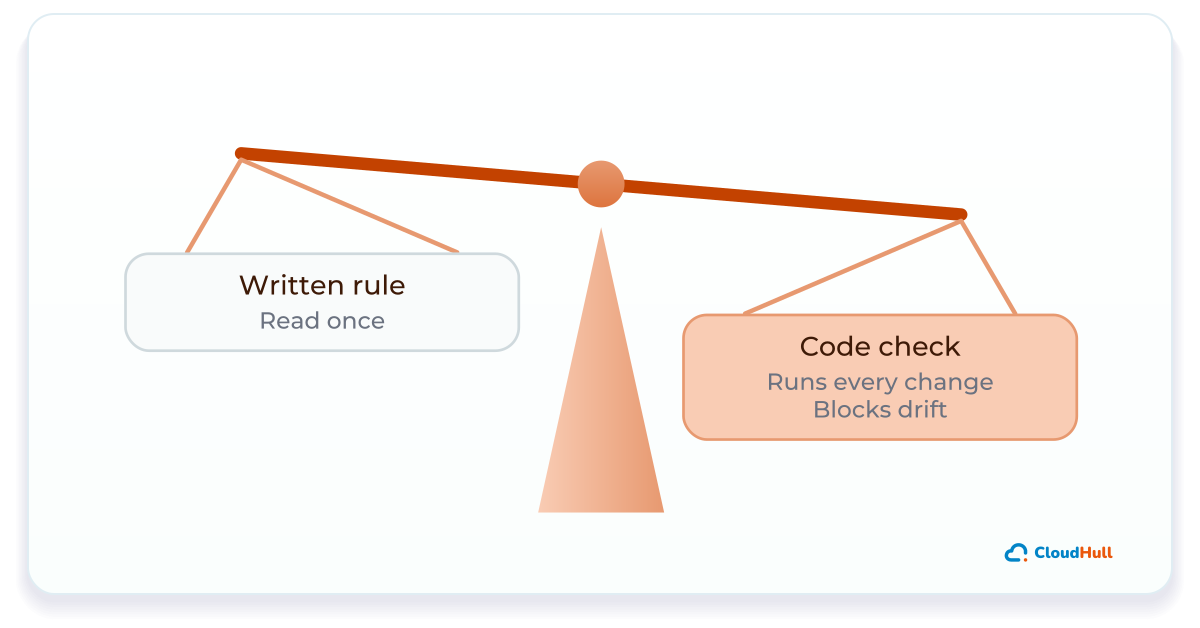
The first is a strategy written as a technology shopping list. It names products and says nothing about the business goal each one serves, so nobody can tell when to stop buying. The second is a strategy that ignores the team. A design needing skills you do not have, or a Kubernetes platform for a team of four, will stall regardless of its elegance. The third is a strategy with no cost model, which means nobody notices when spending drifts. The fourth is a strategy nobody enforces. Standards that exist only in a document get violated within weeks.
Fix the last one with code. Put your account structure, tags and network rules into reviewed infrastructure files and your pipeline will enforce them. This ties the document to daily work and is why I treat automation as part of strategy.
Keep a Decision Log
A decision log is a table of the choices that were hard to make, with the reasons. It saves hours of debate when a new engineer asks why you picked a certain region, and it shows you when a reason has expired.
| Decision | Reason | Alternative rejected | Revisit when |
|---|---|---|---|
| One primary provider | Team skills and a single security model | Two providers for resilience | A customer requires a second provider |
| Account per product | Clear cost and blast radius | One shared account | Product count passes 20 |
| Infrastructure managed in code | Reviewable, repeatable changes | Console changes with documentation | Not planned |
| Two regions for production | Customers in two continents | One region with a content network | Latency data changes |
Four to ten rows are enough. Add the log to the strategy document and update it at every review. The "revisit when" column does the heavy lifting, since it turns a permanent decision into a conditional one.
If you also plan to move workloads, the log should list the approach for each, but those details belong in a separate migration plan. Keep the strategy focused on the platform itself.
Strategy for Small Teams
If your platform team is two people, you do not need a fifty-page strategy. You need a single page that answers five questions: which provider, how accounts are split, how people get access, how infrastructure changes and how you watch the bill. Add a short list of things you will not do this year. That page, kept current, beats a long document that nobody maintains.
Small teams should also lean on managed services. Running your own database cluster or message queue takes skills and nights that a team of two cannot spare. A managed version costs more per hour of compute and far less per hour of your engineers' time. Write that preference into the strategy, so the debate does not return with every new project.
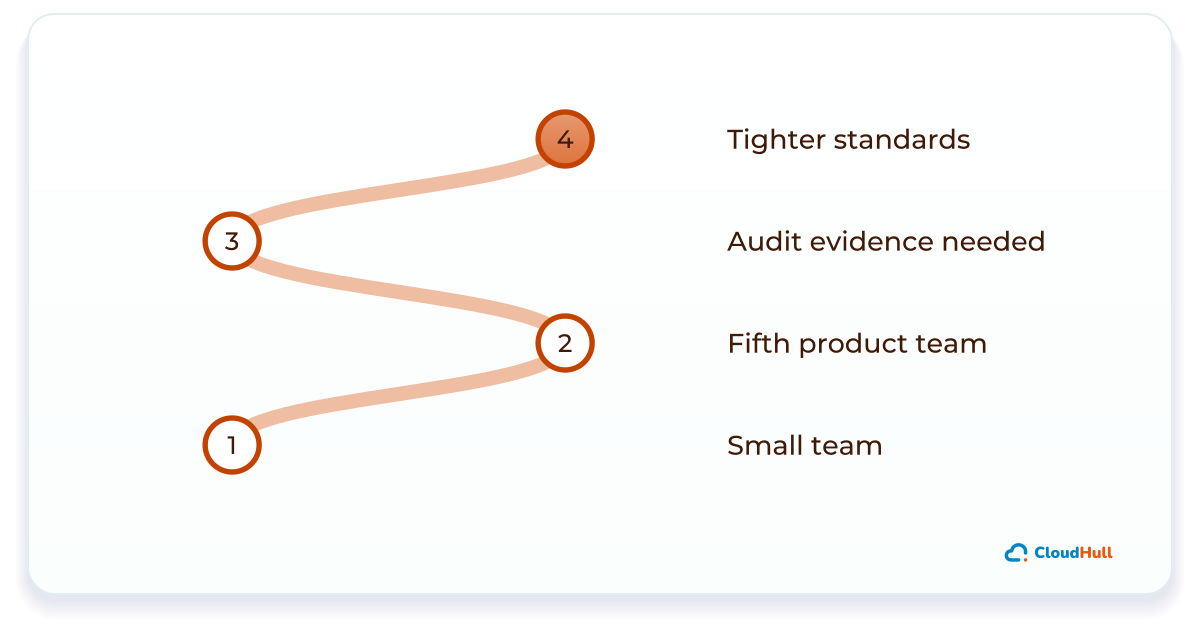
Finally, plan for growth in steps. Define the trigger that moves you to the next level, such as a fifth product team or a customer that requires audit evidence. When the trigger fires, you already know which standards to tighten.
Getting the Strategy Used
Publish the summary where engineers work, such as the main repository or the team wiki. Present it in one meeting, take questions and record changes in the decision log. Link the standards to the pipeline checks that enforce them, and mention the document in every design review. A strategy that appears in daily conversation stays alive. One that lives in a folder gets rewritten from scratch every two years.
How to Choose Who Writes and Owns the Strategy
Give ownership to one person with authority over platform decisions. Invite engineering, security and finance to comment, and set a decision date. If your team is close to the current setup, a neutral outsider can ask the awkward questions, for example why you run three account structures.
- Goals have numbers and owners.
- Hard-to-reverse choices are written down with reasons.
- A short "not now" list exists.
- A review date is in the calendar.
Questions About Cloud Infrastructure Strategy
What Is a Cloud Infrastructure Strategy?
It is a short, written plan for how your cloud platform should look in two to three years and how you will get there. It covers providers, account structure, networking, security, cost rules, automation and who owns what.
How Long Should a Cloud Infrastructure Strategy Be?
Short enough that people read it. I aim for five to ten pages plus a one-page summary. A strategy nobody opens does not guide any decision.
Should We Choose One Cloud Provider or Several?
Start with one unless you have a concrete reason, such as a customer requirement or a service available on only one provider. A second provider doubles skills, tooling and security work, so it must earn its place.
How Often Should We Revisit the Strategy?
Review it twice a year and rewrite it when your business changes, for example after an acquisition, a new market or a big cost shift. Small updates are fine in between.
Who Should Own the Strategy?
One accountable person, usually a head of platform, a CTO or a lead architect. Input comes from engineering, security and finance, but a document with five owners ends up with none.
How Do We Link the Strategy to Cost?
Set a target for cost per product or per customer, tag resources so the number is visible and review it monthly. Include rules for commitments and for shutting down non-production resources.
Do We Need Outside Help to Write One?
Not always. Outside help is useful when your team is too close to the current setup, when you lack experience with a provider or when you need a neutral document for your board or auditors.
Sources
Please note: this guide is general information and not legal, financial or tax advice. Numbers and examples are typical-project estimates; confirm current details with your providers and advisers.
Did this article help you?
Thanks, noted.
Garrett Linville
Garrett leads the Cloud Hull editorial team and works with the consultants to turn real client projects into practical guides on cloud migration, DevOps, security and cost control. Each article is edited together with the consultant who did the work, and every price and limit is checked against current provider documentation. He is based in the USA and works remotely.