Main Points
- Write a one-page brief with goals, budget range, sponsor and owner before any technical work.
- Give every workload a disposition: retire, rehost, replatform, refactor or retain.
- Build identity, logging and cost tagging before moving production workloads.
- Pilot first, then migrate in waves with gates, buffers and a quarterly review.
A cloud strategy roadmap puts your cloud plans on a calendar: what happens in which quarter, who owns it and what has to be true before the next step starts. A strategy says where you want to end up. The roadmap says how you get there without breaking production or the budget. It is also the document a cloud strategy consulting team hands over first, since everything else hangs from it.
Below is an 18-month roadmap I have adapted for fintech and ecommerce teams. It has six phases, each with milestones and a gate. Copy it, change the dates and delete what does not apply. The point is to have a sequence that people can argue with and improve.
The Six Phases and Their Gates
| Phase | Months | Main milestone | Gate to move on |
|---|---|---|---|
| 1. Align | 0 to 1 | Goals, owners and budget range agreed | Sponsor signs the one-page brief |
| 2. Assess | 1 to 3 | Application inventory and readiness scores | Every workload has a disposition |
| 3. Foundation | 3 to 6 | Landing zone, identity, network, cost tagging | Security and finance approve the baseline |
| 4. Pilot | 6 to 9 | First two or three workloads live in production | Run for a full billing cycle with no major incident |
| 5. Scale | 9 to 15 | Remaining workloads moved in waves | Each wave meets its cost and uptime targets |
| 6. Optimize | 15 to 18 | Cost tuning, automation, operating model in place | Quarterly review runs without outside help |
Treat the months as a starting point. A company with 20 applications may finish in nine months. One with 200 and a data center exit date will plan differently. What matters more than the dates is the order and the gates.
Phase 1: Agree on Why You Are Moving
Write a one-page brief with three to five goals, a rough budget range, a sponsor and a named program owner. Goals should be about the business: close a data center by a date, cut infrastructure cost, release faster, meet a customer's security demand. Different goals lead to different roadmaps. A cost goal favors rightsizing and commitments. A speed goal favors containers and pipelines.
Get the sponsor to sign it. I have seen roadmaps stall at month four because finance and engineering had different ideas about success. A signed page settles that in week one.
Phase 2: Inventory and Decide What Happens to Each Workload
List every application, its owner, its dependencies and what it costs to run. Then give each one a disposition: retire it, rehost it as is, replatform it with small changes, refactor it or keep it where it is. The five choices are often called the migration strategies, and the right mix is rarely what people expect. In most inventories I do, 10 to 20 percent of applications turn out to be candidates for retirement, which is the cheapest outcome there is.
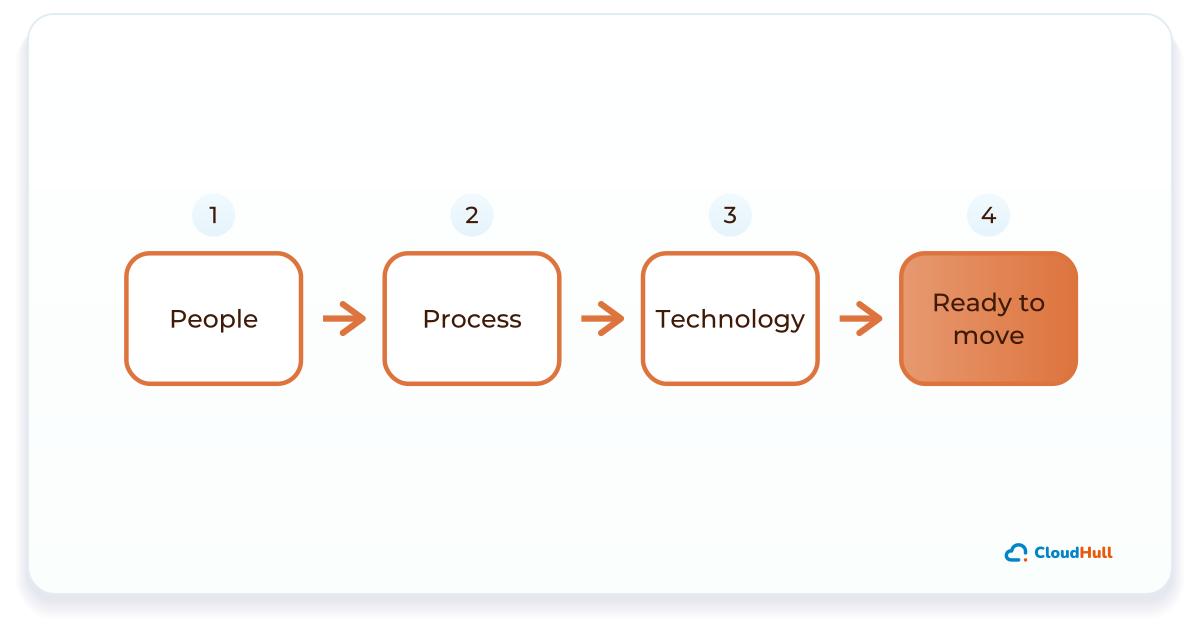
Score readiness for each workload. If you have never done it, the method in my guide to a cloud strategy assessment shows how to rate people, process and technology. Use the scores to sort the roadmap: low-risk, low-dependency workloads go first.
| Disposition | What it means | Typical use |
|---|---|---|
| Retire | Switch it off | Unused or duplicate systems |
| Rehost | Move as is to cloud servers | Stable apps with a hard deadline |
| Replatform | Small changes, such as a managed database | Apps that gain from managed services |
| Refactor | Redesign for cloud-native services | Core products that need scale or speed |
| Retain | Leave on premises for now | Systems with licensing or latency limits |
Phase 3: Build the Foundation Before You Move Anything
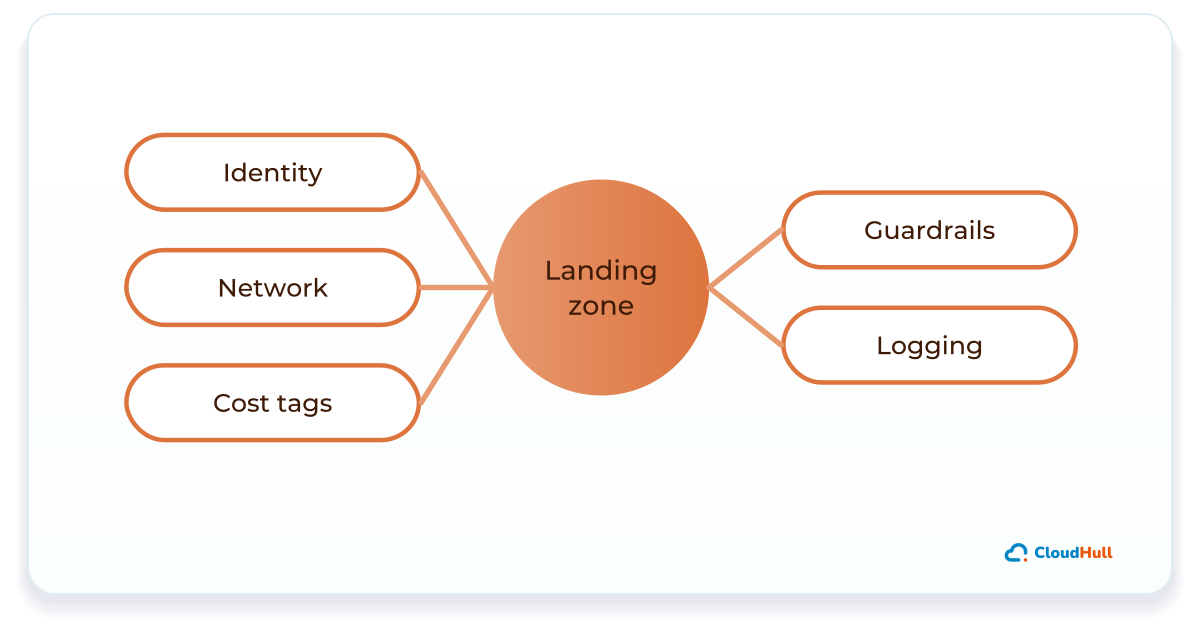
The foundation is often called a landing zone: the accounts, identity, network, logging, security rules and cost tagging that every workload will use. Build it once and build it properly. Moving a workload into a messy environment creates problems that are expensive to fix later, such as public storage, shared admin logins and untagged spend that finance cannot trace.
Include the operating model in this phase. Who is on call? Who approves new accounts? Who watches the bill? Teams that wait until after the move to answer these questions discover them at 2 a.m.
Phase 4: Prove the Path With a Small Pilot
Pick two or three workloads that are real but forgiving: an internal tool, a reporting system, a customer-facing service with low traffic. Move them end to end, including monitoring, backup and rollback. Then run them for a full billing cycle. You will learn what your estimates got wrong, usually network costs and the time needed for testing.
Write down the pilot's lessons and update the roadmap. A pilot that changes nothing was not a pilot.
Phase 5: Move in Waves
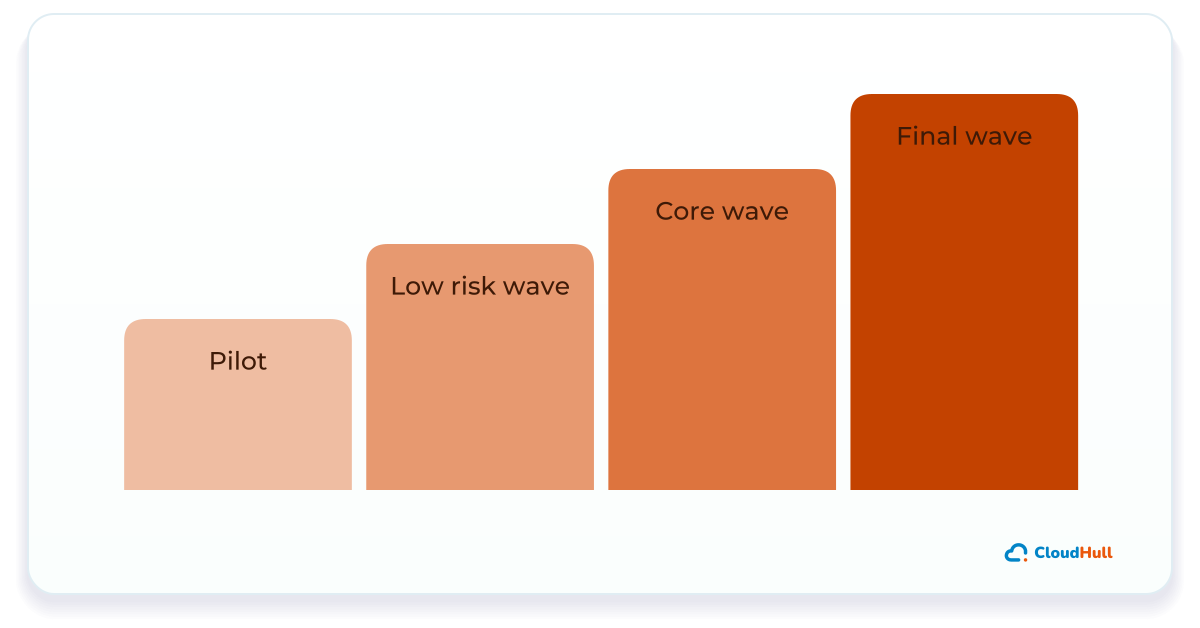
Group the remaining workloads into waves of 5 to 15 that share dependencies, such as an application and its database. Set a target date and rollback plan for each wave, and hold a short review after it. A wave plan also makes the budget visible: you can attach a cost and a date to each group instead of one number for the whole program.
Expect delay. In my client work roughly one wave in three slips by a few weeks, usually because of a dependency nobody documented. Keep a buffer between waves and avoid scheduling them before a peak season. For an online store, a wave in the weeks before a big sale is a risk you do not need.
Phase 6: Optimize and Hand Over
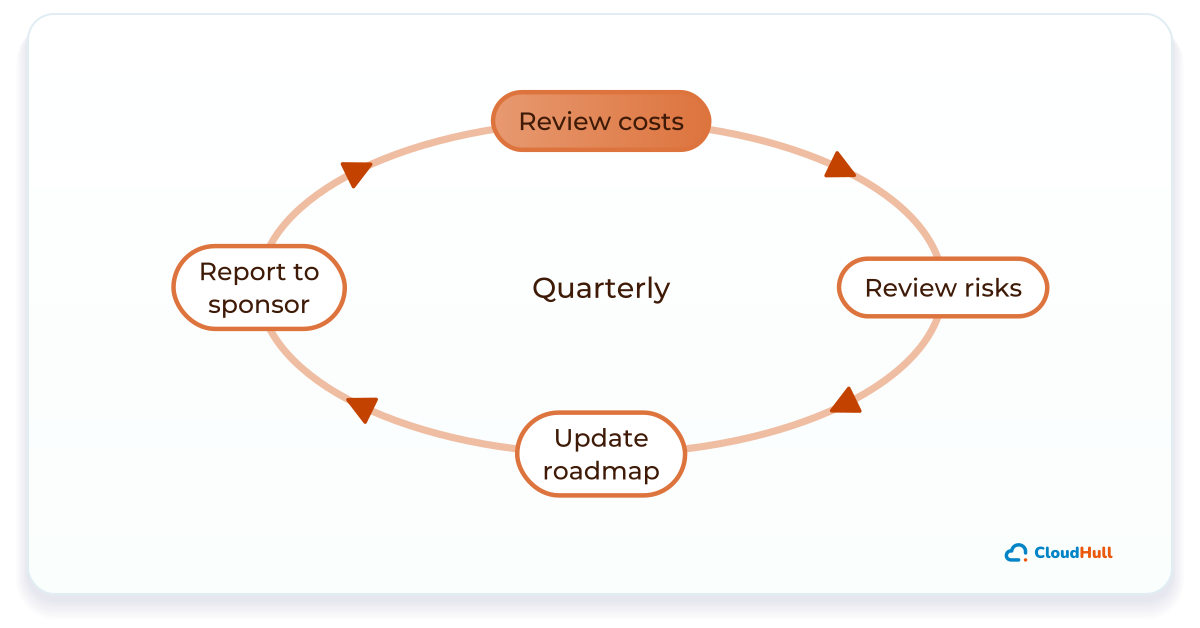
After the final wave, costs and settings need tuning. Rightsize instances, remove idle resources, move steady workloads to committed pricing and automate what still runs by hand. Put a quarterly review in the calendar with the program owner, finance and security. By the end of this phase your team, not the consultants, should run the cycle.
Link the roadmap to a working cloud strategy checklist so each gate has clear pass conditions. When you need a structure for the decisions behind the plan, the cloud strategy framework lays them out, and cloud strategy examples show how other companies sequenced theirs.
How the Budget Usually Splits Across Phases
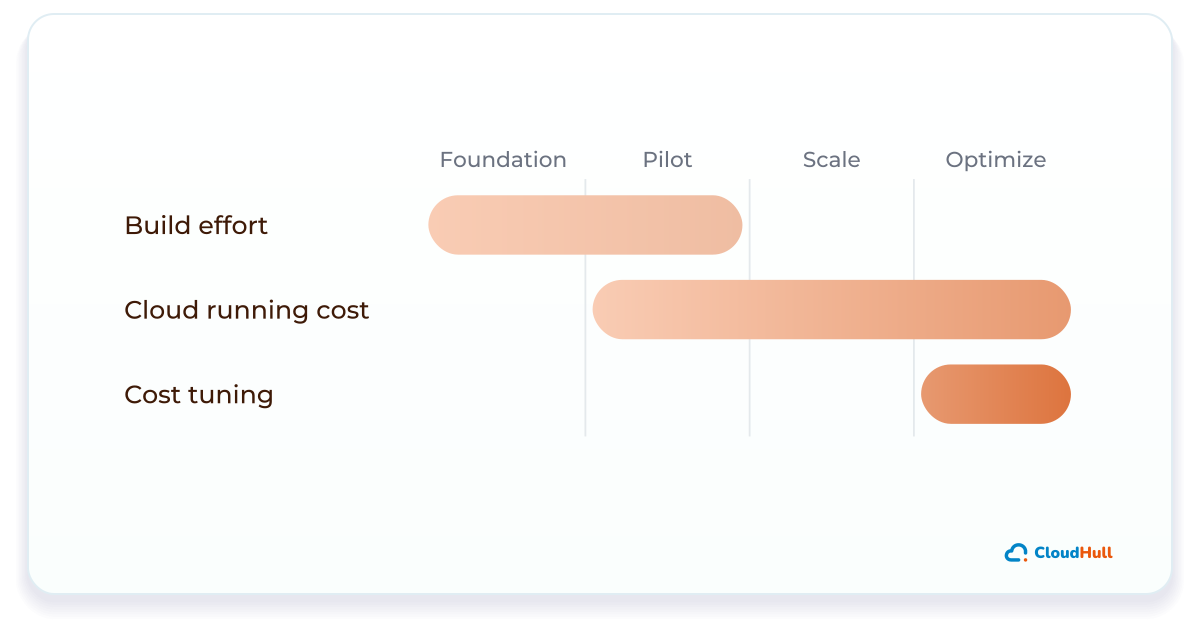
Cost shape surprises many sponsors. The foundation and the first waves cost more per workload than the later ones, because you are building shared pieces and learning at the same time. Later waves get cheaper as templates and runbooks mature. As a rule of thumb from my own projects, expect about a quarter of the program effort in phases 1 to 3, a tenth in the pilot and the largest share in the scale phase. Treat those proportions as planning figures, not promises, and replace them with your own numbers after the pilot.
Remember that the running cost starts in the pilot. You pay for cloud and old systems at the same time until each wave is switched off, and that overlap is where many budgets go wrong. Put the switch-off date for the old system into each wave plan, and make someone responsible for actually turning it off.
A Fintech Timeline in Practice
A lending platform I advised had 60 applications, a data center lease ending in 14 months and a regulator-driven requirement for audit logging. Phase 1 took three weeks and ended with one clear goal: out of the data center by the lease date. The assessment retired nine applications and kept four on premises for later. The foundation took four months because the security team insisted on a separate logging account and approval rules for network changes. That was slower than planned and worth it.
The pilot moved an internal reporting tool and a low-traffic customer portal. It surfaced a database latency issue that would have been a customer-facing problem in wave two. The team moved the remaining 47 applications in five waves, and wave four slipped by three weeks over an undocumented file share. The lease ended with a month to spare. None of that was dramatic, which is the goal of a good roadmap.
Who Does What at Each Gate
At every gate, the same four people should be in the room: the sponsor, the program owner, a security representative and someone from finance. Each asks one question. The sponsor asks whether the goals still hold. The program owner asks whether the plan and dates are realistic. Security asks whether the baseline controls are in place. Finance asks whether the forecast and the bill still match. When all four agree, you move on. When one does not, you fix the issue before the next phase.
What Usually Breaks the Roadmap
Four things derail roadmaps more than technical problems. The sponsor leaves or loses interest. Skills are missing, so the team learns on the job and wave dates slip. Costs surprise finance because nobody modeled data transfer and idle environments. And scope grows, as teams add improvements to every migration. Name an owner for each risk in your roadmap and review them at every gate.
| Risk | Early sign | Response |
|---|---|---|
| Sponsor attention fades | Gate reviews get postponed | Monthly one-page status to the sponsor |
| Missing skills | Pilot takes twice the estimate | Training plan or outside help for the first waves |
| Cost surprises | Forecast and actual differ by more than 20 percent | Tagging, budgets and a monthly review with finance |
| Scope growth | Migrations include redesign work | Rule: move first, improve in phase 6 |
How to Adapt the Roadmap to Your Company
If you have a hard deadline, such as a lease ending, shorten the assess and foundation phases and use more rehosting. If your goal is speed of delivery, spend more of the budget on pipelines and refactoring a few core services. If you are small, merge phases 1 and 2 and pilot with a single workload. The sequence stays the same: align, assess, build the base, prove it, scale and optimize. Skipping a phase does not remove the work. It moves it to a more expensive time.
Sources
Questions About Cloud Strategy Roadmaps
What Is a Cloud Strategy Roadmap?
It is a sequenced plan that shows which cloud work happens in which phase, who owns it and what must be true before the next step. It turns a strategy into a calendar and a budget.
How Long Does a Typical Cloud Roadmap Run?
Twelve to eighteen months is common for a mid-sized company. Smaller portfolios finish in six to nine months, while large ones with a data center exit can run longer.
What Should Be in the First Phase?
A signed one-page brief with goals, a budget range, a sponsor and a program owner. Without it, teams disagree about success halfway through.
How Many Workloads Should I Migrate in the Pilot?
Two or three real but forgiving workloads. Enough to test migration, monitoring, backup and rollback, but few enough to learn quickly.
How Do I Keep the Roadmap on Schedule?
Use gates with clear pass conditions, keep a buffer between waves, and review risks at every gate. Update the plan after the pilot, because estimates always change.
Who Should Own the Roadmap?
One program owner with authority across engineering, security and finance, supported by a sponsor at leadership level.
Can I Use the Same Roadmap for Multi-Cloud?
Yes, the phases are the same. Add a decision in phase 1 about why you need more than one provider, because each extra provider adds skills, cost and complexity.
Please note: this guide is general information and not legal, financial or tax advice. Numbers and examples are typical-project estimates; confirm current details with your providers and advisers.
Did this article help you?
Thanks, noted.
Garrett Linville
Garrett leads the Cloud Hull editorial team and works with the consultants to turn real client projects into practical guides on cloud migration, DevOps, security and cost control. Each article is edited together with the consultant who did the work, and every price and limit is checked against current provider documentation. He is based in the USA and works remotely.