Main Points
- A cloud architecture framework is an ordered set of decisions.
- Six phases cover goals, workloads, principles, target design, validation and operations.
- Validate the design against failure, security and cost before you build.
- Scale the framework to the stakes, but never skip the validation step.
A cloud architecture framework is a repeatable order of decisions. It tells you what to settle first, what to defer and how to prove the design works before you build it. When I run cloud architecture consulting projects, I use six phases, and I have kept them stable across fintech, ecommerce and SaaS clients.
The model here is my own blueprint. It borrows its checks from the public frameworks of the big providers, and it adds the parts they leave out: ownership, sequencing and a realistic timeline. Use it as written, or cut it down for a smaller workload.
The Six Phases in Short
| Phase | What it answers | Output | Typical time |
|---|---|---|---|
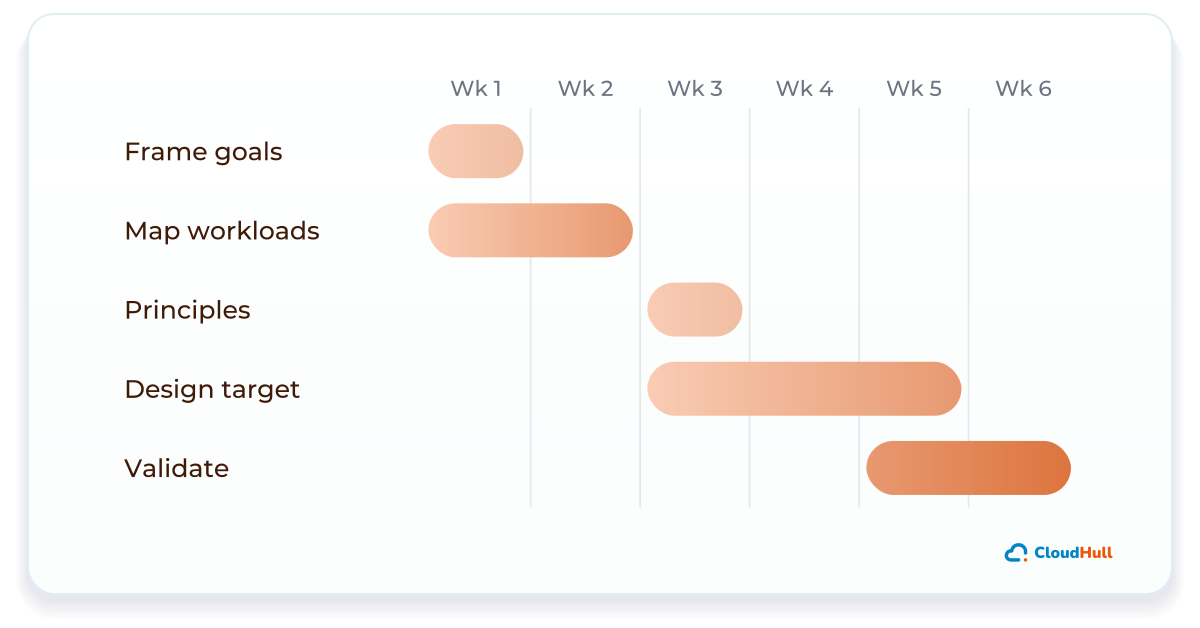
| 1. Frame the Goals | What must the design achieve? | One-page goals and limits | 2 to 3 days |
| 2. Map the Workloads | What runs today and what depends on what? | Inventory and dependency map | 1 to 2 weeks |
| 3. Decide the Principles | Which trade-offs will we always make? | Short decision record | 3 to 5 days |
| 4. Design the Target | What does the target look like? | Diagrams and service choices | 2 to 3 weeks |
| 5. Validate Before Building | Where will it break or overspend? | Review findings and test results | 1 to 2 weeks |
| 6. Build and Operate | How do we ship and keep it healthy? | Pipelines, runbooks, review cycle | Ongoing |
Timelines assume one workload group and a small review team. Larger estates run phases in parallel by workload wave.
Phase 1: Frame the Goals
Start with what the design must achieve, in plain words. Typical goals are recovery within an hour, a bill that grows slower than revenue, or passing a customer security review. Add the limits next to them: budget, team size, regulation and deadlines.
Keep this to one page. If you cannot rank the goals, the design will try to satisfy all of them and succeed at none. Ask the business to pick the top two.
Phase 2: Map the Workloads
List every application, database and integration in scope. For each, record owner, traffic pattern, data sensitivity and what it depends on. The step feels slow, and it is where most surprises appear: a forgotten batch job, a hard-coded IP address or a license tied to a physical server.
A structured review speeds it up. My notes on the cloud architecture assessment show the scoring I use for this inventory.
| What to record | Why it matters |
|---|---|
| Owner and business purpose | Someone must decide when trade-offs arise |
| Traffic pattern and peak | Drives scaling and cost choices |
| Data type and location | Drives security and residency rules |
| Dependencies in and out | Drives migration order and failure impact |
| Current monthly cost | Gives you a baseline to beat |
Phase 3: Decide the Principles
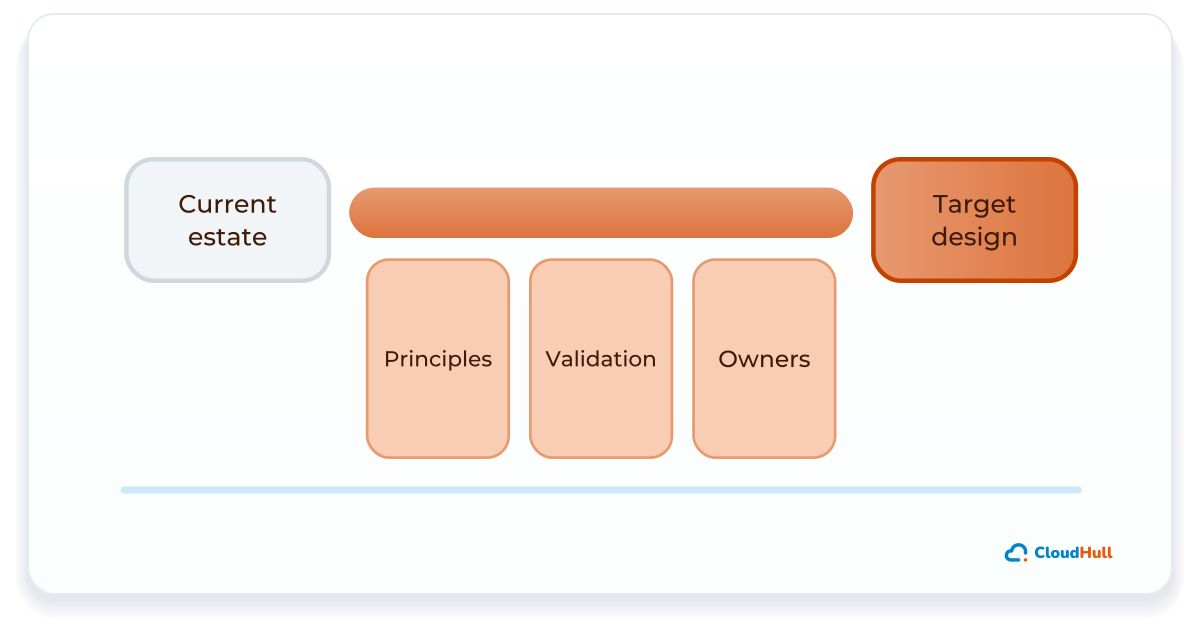
Principles are the trade-offs you decide once, so you do not argue them for every service. Examples: managed services before self-run, two zones minimum, every resource tagged, security controls defined as code. Write five to eight of them and have the architecture owner sign off.
The public frameworks help here. AWS organizes its checks around six pillars, and Azure uses five, while Google Cloud groups its guidance into its own set of categories. Read them for the questions they ask, then adapt the answers to your size. Sources are listed at the end.
Phase 4: Design the Target
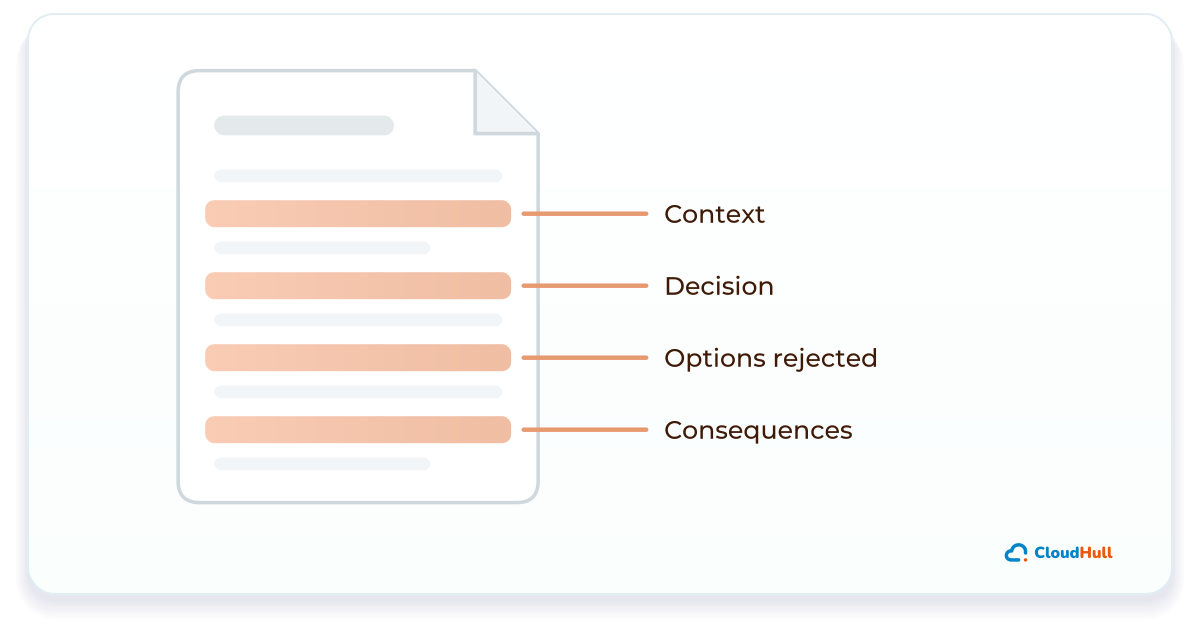
Now draw the target. Choose the compute model (virtual machines, containers or functions), the data stores, the network layout and the identity setup. Document each choice with the alternative you rejected and why. The rejected alternative saves hours when someone questions the design a year later.
Good examples help at this stage. My collection of cloud architecture examples shows ten designs with their trade-offs, and the cloud architecture tools ranking covers what to draw them in.
Phase 5: Validate Before Building
A design on paper still hides problems. Review it against failure, security and cost before anyone writes infrastructure code. Walk through three failures: a zone outage, a leaked credential and a ten times traffic spike. Note what each one does to the design.
Then run the written list. The cloud architecture checklist gives you eleven verifiable points, and the cloud architecture best practices cover the rules underneath. Fix the findings in the design before the build.
Phase 6: Build and Operate
Build in waves, one workload group at a time, with infrastructure defined as code and a pipeline that deploys it. Ship the smallest slice that proves the design on real traffic, then widen it. Write runbooks for the failures you named in phase five.
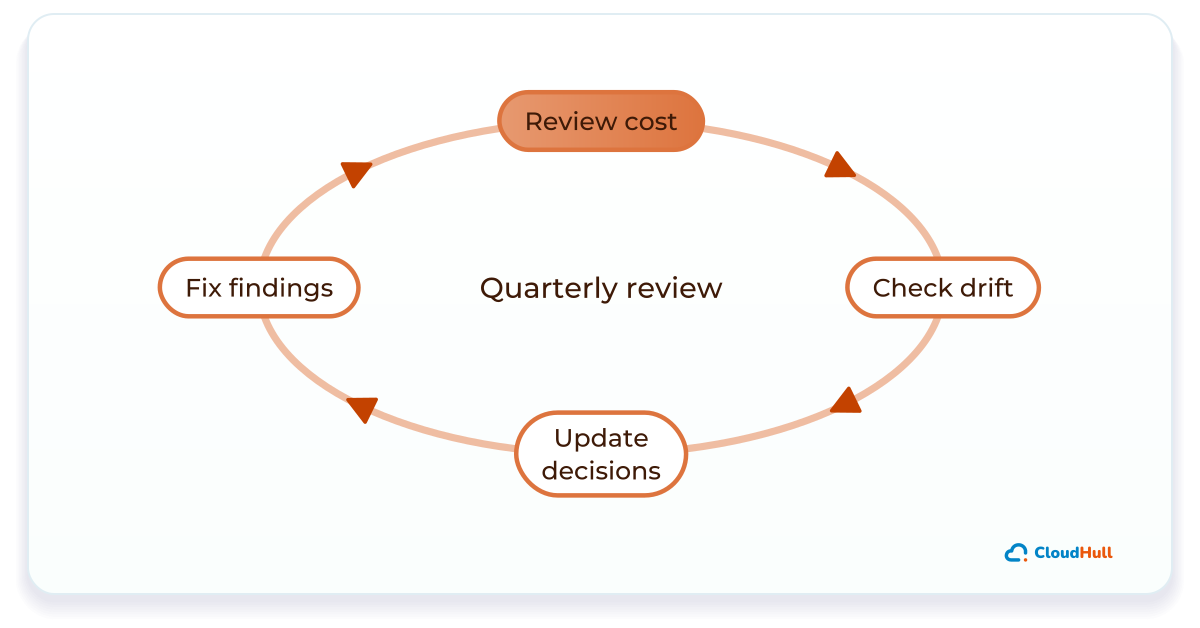
Operating is part of the framework. Schedule a quarterly review of cost, utilization and open risks, and an annual review of the whole design. A framework that stops at go-live produces a good diagram and a decaying system.
A Worked Pass Through the Framework
Take an online retailer that runs a storefront, an order system and a reporting database on a handful of large servers. The business wants to survive its November peak and cut the cloud bill. Here is how the six phases play out for that case, with ranges from my own client work.
| Phase | What the retailer decided |
|---|---|
| 1. Frame the Goals | Survive three times normal peak traffic, keep cost per order falling, recover within two hours |
| 2. Map the Workloads | Found a nightly export job and a legacy pricing service that nobody listed at the start |
| 3. Decide the Principles | Managed database, two zones, stateless web tier, tags enforced in the pipeline |
| 4. Design the Target | Autoscaling web tier, cache, read replica, object storage with CDN, queue for order events |
| 5. Validate Before Building | Load test found a database connection limit at twice normal traffic, fixed in design |
| 6. Build and Operate | Built in two waves, quarterly cost review found oversized instances in the second quarter |
Two things stand out. The hidden pricing service was found in phase two and would have broken the cutover if it had surfaced in phase six. The connection limit was cheap to fix on paper and would have been a peak-day outage in production. The order exists so that problems are found at the phase where they cost least.
Where Teams Get Stuck
The first sticking point is phase one. Business owners often hand over a list of twelve equal priorities. Push back until two goals are ranked first. The second is phase two, where teams stop after the first round of interviews. Ask for traffic and cost data from monitoring instead of relying on memory, because memory skips the job that runs once a month.
The third is phase five, which teams treat as a formality. A review where nobody finds anything usually means nobody looked hard. Bring someone from outside the design team, such as a security engineer or a colleague from another product, and give them the failure scenarios to attack.
The fourth is phase six, where the framework quietly ends at go-live. Put the quarterly review on the calendar with a named owner before launch, and record each review in the same decision log you started in phase three.
Who Does What in the Framework
Phases fail when nobody owns them. I assign one owner per phase and a named reviewer, and I keep the group small. The architecture owner runs the whole model, an engineering lead supplies the technical facts and a finance contact keeps the cost view honest.
| Phase | Owner | Reviewer |
|---|---|---|
| 1. Frame the Goals | Business sponsor | Architecture owner |
| 2. Map the Workloads | Engineering lead | Operations lead |
| 3. Decide the Principles | Architecture owner | Security lead |
| 4. Design the Target | Architecture owner | Engineering lead |
| 5. Validate Before Building | Security lead | Finance contact |
| 6. Build and Operate | Engineering lead | Architecture owner |
Small teams double up on roles, and that is fine. The rule is that the owner of a phase is never its only reviewer. A second pair of eyes catches the assumption the owner stopped seeing weeks ago.
How Long the Framework Takes in Practice
For one mid-size workload group, phases one to five usually take six to ten weeks end to end. Phase two is the one that runs over, because teams find systems nobody documented. If your estate is large, run phases two to five per wave and keep phases one and three shared.
Smaller teams can collapse phases one and three into a single workshop and merge phase five into the design review. Do not skip validation, even for a small system. A one-day failure walkthrough catches issues that cost weeks later.
A last point on sequencing. Resist the urge to start phase four because the diagram is the fun part. Teams that jump to design skip the goals and inventory work, then discover in phase five that the design solves a problem nobody had. The earlier phases are short on purpose, and each takes only days when the owner is prepared.
If you run out of time, shorten phases rather than skipping them. A one-hour goals session still beats none, and a half-day inventory still finds the forgotten server. The order matters more than the length of each step.
Principles That Hold Up Over Time
Principles age badly when they name products. "Use Service X for queues" breaks the day you switch providers or the product changes. Write principles about behavior instead, and keep the product names in the design document where they can change.
- Prefer managed services unless you can name a reason to run it yourself.
- Every tier runs in at least two zones.
- No resource exists without an owner, purpose and environment tag.
- Every change to production goes through code and review.
- Data is encrypted by default and access is the minimum needed.
- Every design states its monthly cost at expected and double load.
Six is a good number. At ten or more, nobody remembers them, and exceptions start to outnumber the rule. When an exception is needed, write it in the decision log with an expiry date and an owner, so it gets reviewed instead of becoming the new normal.
Keeping the Documents Short and Alive
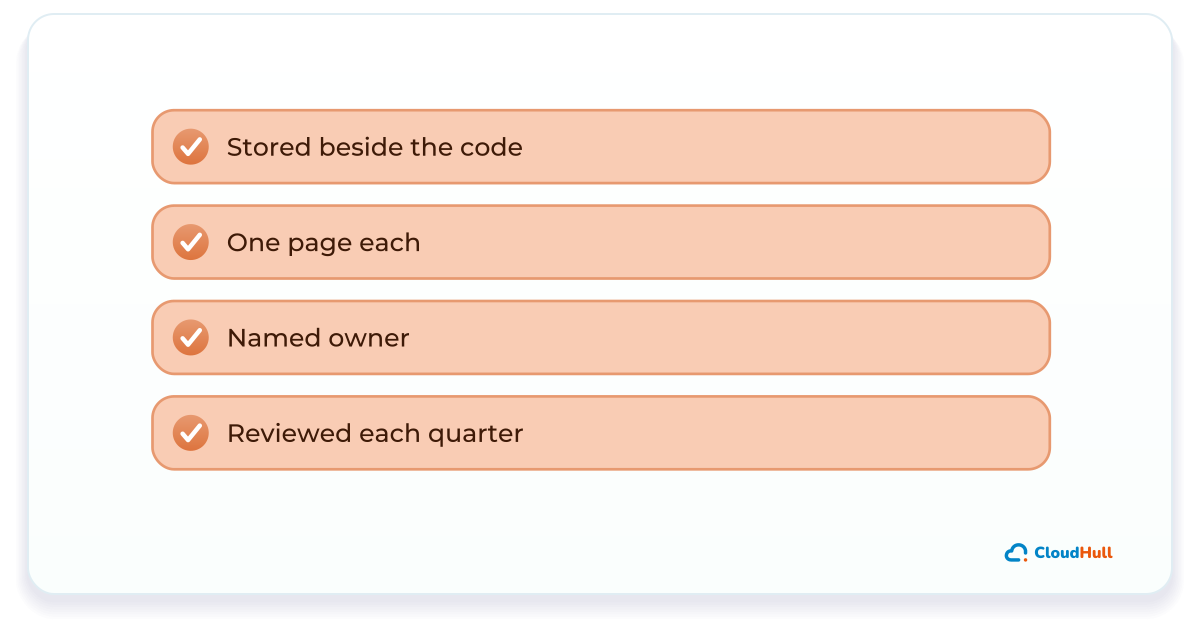
The outputs in the overview table are deliberately small. A goals page, an inventory, a short principle list, a diagram set and a decision log are enough. Long documents are written once and read never. Short ones get updated when something changes, which is what keeps them true.
Store them next to the code in the same repository wherever possible. When a pull request changes the architecture, the reviewer sees the document change in the same view. The habit alone removes most of the drift I find in annual reviews.
How to Choose Between Fast and Thorough Versions
Scale the framework to the stakes. A low-risk internal tool can use a light pass: one-page goals, a short decision record and the checklist. A payments platform or a regulated workload needs every phase, with written sign-offs and a documented test of recovery.
- Does a failure here cost customers or revenue directly?
- Does regulation require evidence of your controls?
- Will more than three teams depend on this design?
- Is the system expected to live longer than three years?
Two or more yes answers mean the thorough version. In my experience, teams that skip phases to save a month usually lose three later.
Sources
- AWS Well-Architected Framework
- Microsoft Azure Well-Architected Framework
- Google Cloud Well-Architected Framework
Please note: this guide is general information and not legal, financial or tax advice. Numbers and examples are typical-project estimates; confirm current details with your providers and advisers.
Did this article help you?
Thanks, noted.
Garrett Linville
Garrett leads the Cloud Hull editorial team and works with the consultants to turn real client projects into practical guides on cloud migration, DevOps, security and cost control. Each article is edited together with the consultant who did the work, and every price and limit is checked against current provider documentation. He is based in the USA and works remotely.